PIAGGIO STATION
How can PIAGGIO leverage
its core competencies to remain competitive
in the industry in 2023?

PRODUCT
Background
This consulting project, completed 10 years ago, applied multiple research methods including SWOT and STEEP analyses, generational studies, and future projections. The work was a collaboration between PIAGGIO, my ArtCenter graduate colleagues, and me. I evaluated PIAGGIO’s core capabilities and market positioning to narrow the focus to a specific segment. Interviews with Jakarta city planners highlighted a need for improved public transportation for young suburban commuters, and my proposal supported that direction by creating a more enjoyable commuting experience.
Problem
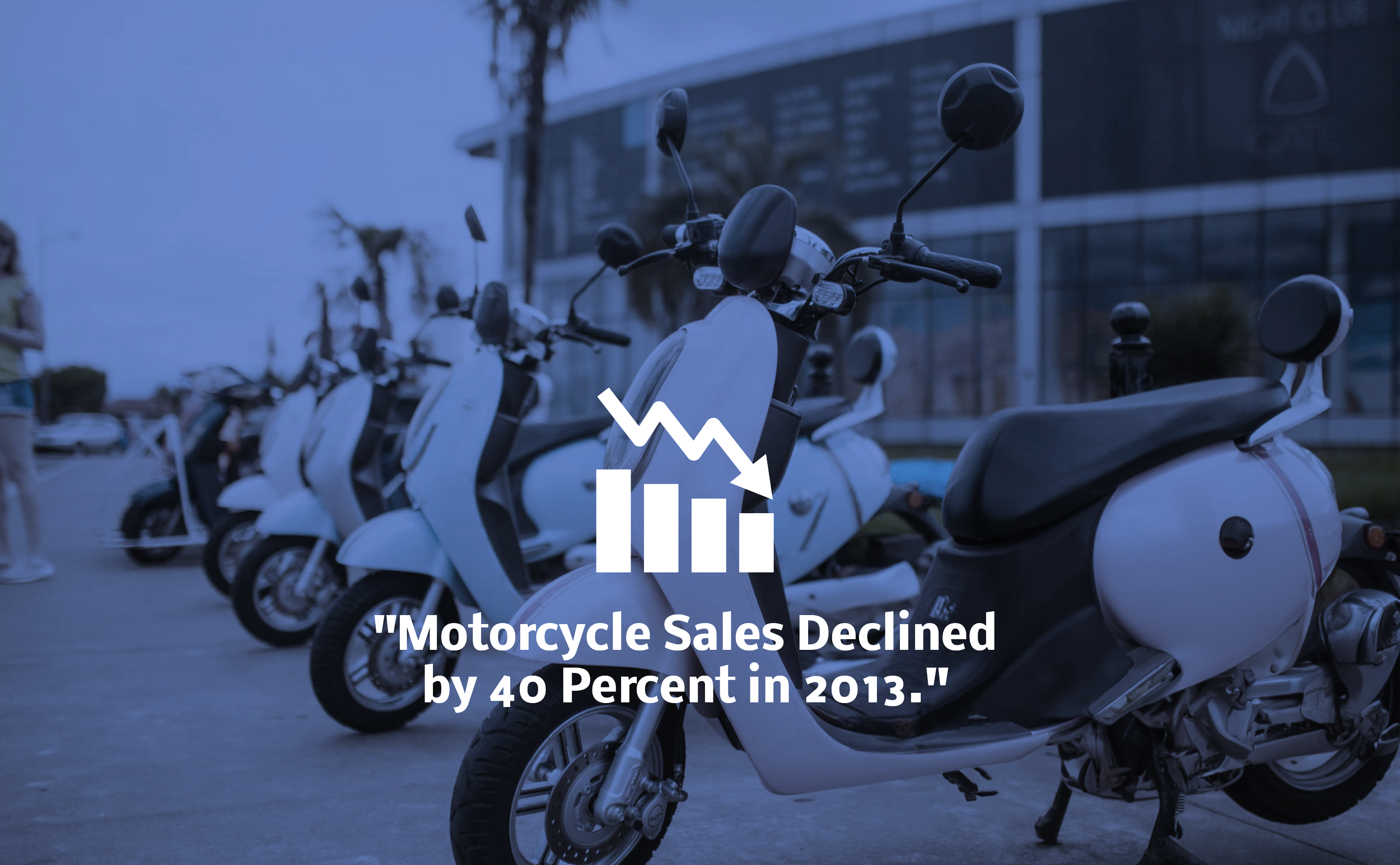
Motorcycles were becoming less appealing to Gen Z due to rising safety concerns, making it harder for PIAGGIO to stay relevant with the 18–30 segment. At the same time, more young people were moving to suburban areas and facing longer commutes, but insufficient infrastructure and limited transit schedules constrained their mobility and daily routines.
Solution
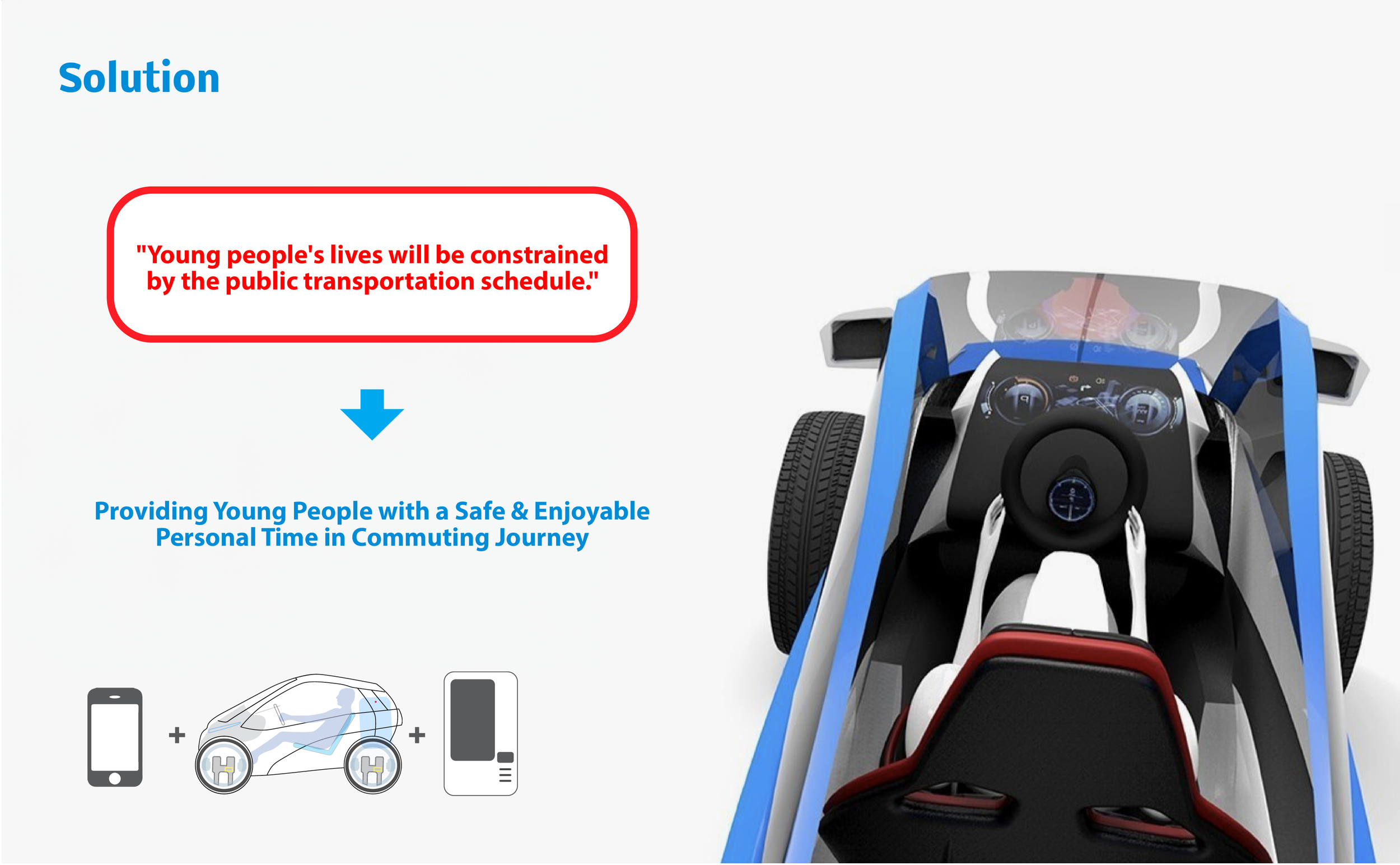
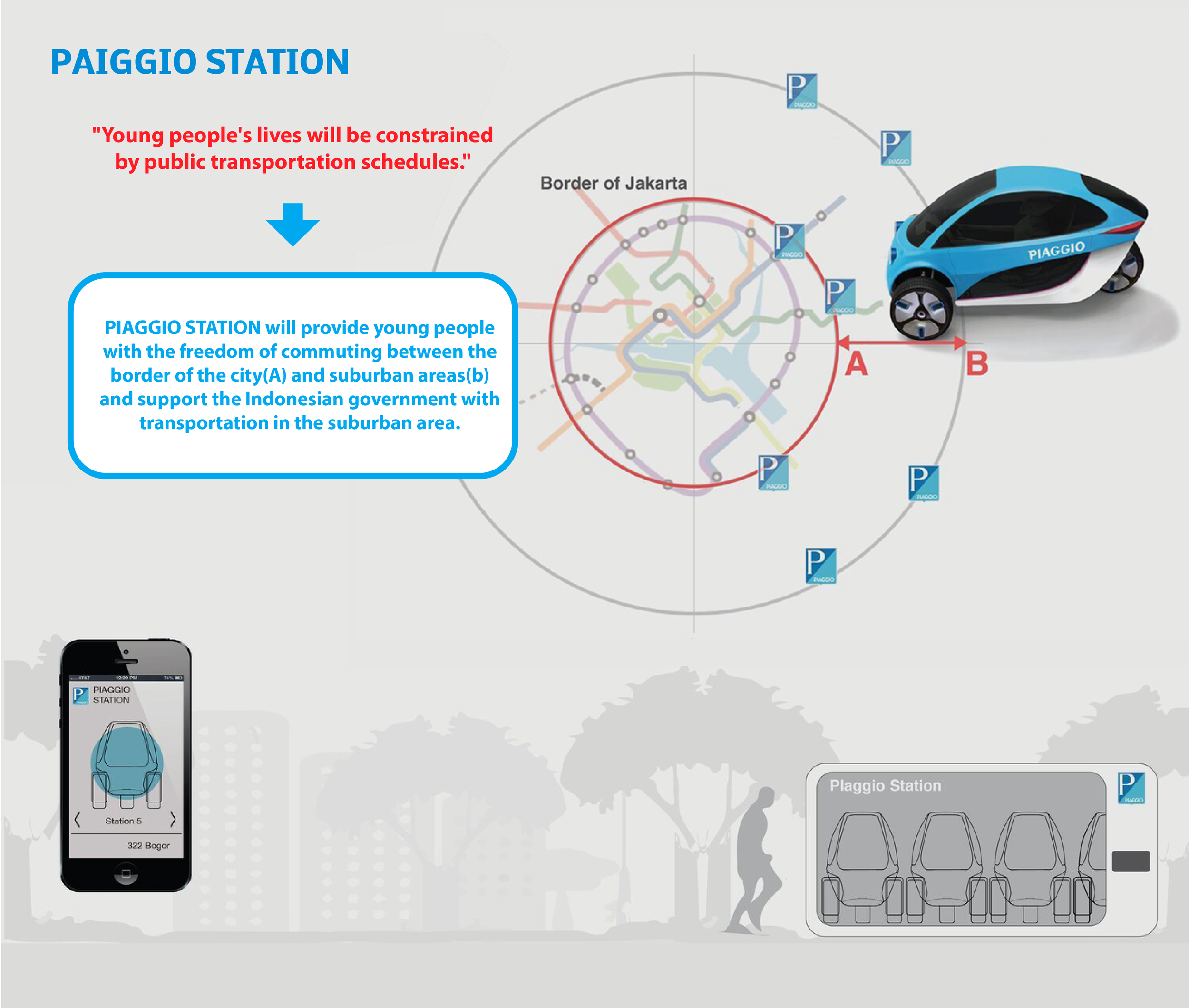
Designed PIAGGIO Station, a station-based mobility service for 18–30 suburban commuters in Jakarta that extends freedom beyond limited transit schedules. The concept paired an E-Trike with a protective shell to reduce safety anxiety while keeping the agility of two-wheel mobility. By combining on-demand rental access, station coverage, and an enjoyable personal-space commuting experience, PIAGGIO could shift from a product-only motorcycle brand to a scalable service-based mobility model.
STRATEGY
01. What to Achieve
Frame Question
How can PIAGGIO create a new mobility business model that engages young commuters in 2022–2023?
Outcomes
Optimize PIAGGIO’s competencies for future transportation needs
Reestablish the brand with a clearer identity and vision
Recalibrate PIAGGIO’s scope toward scalable service-based growth
02. Where to Play
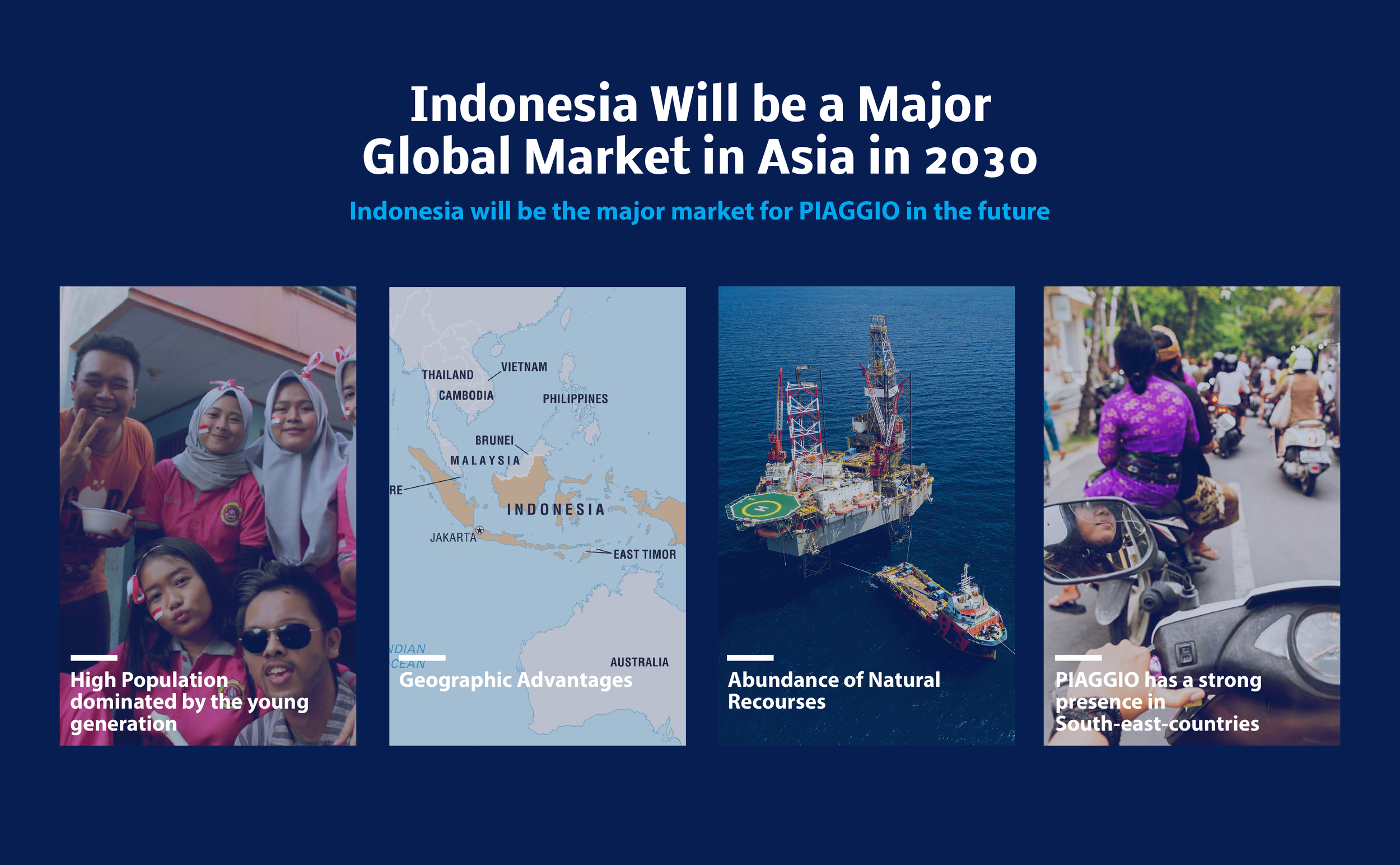
Geography: Indonesia, identified as a major future growth market
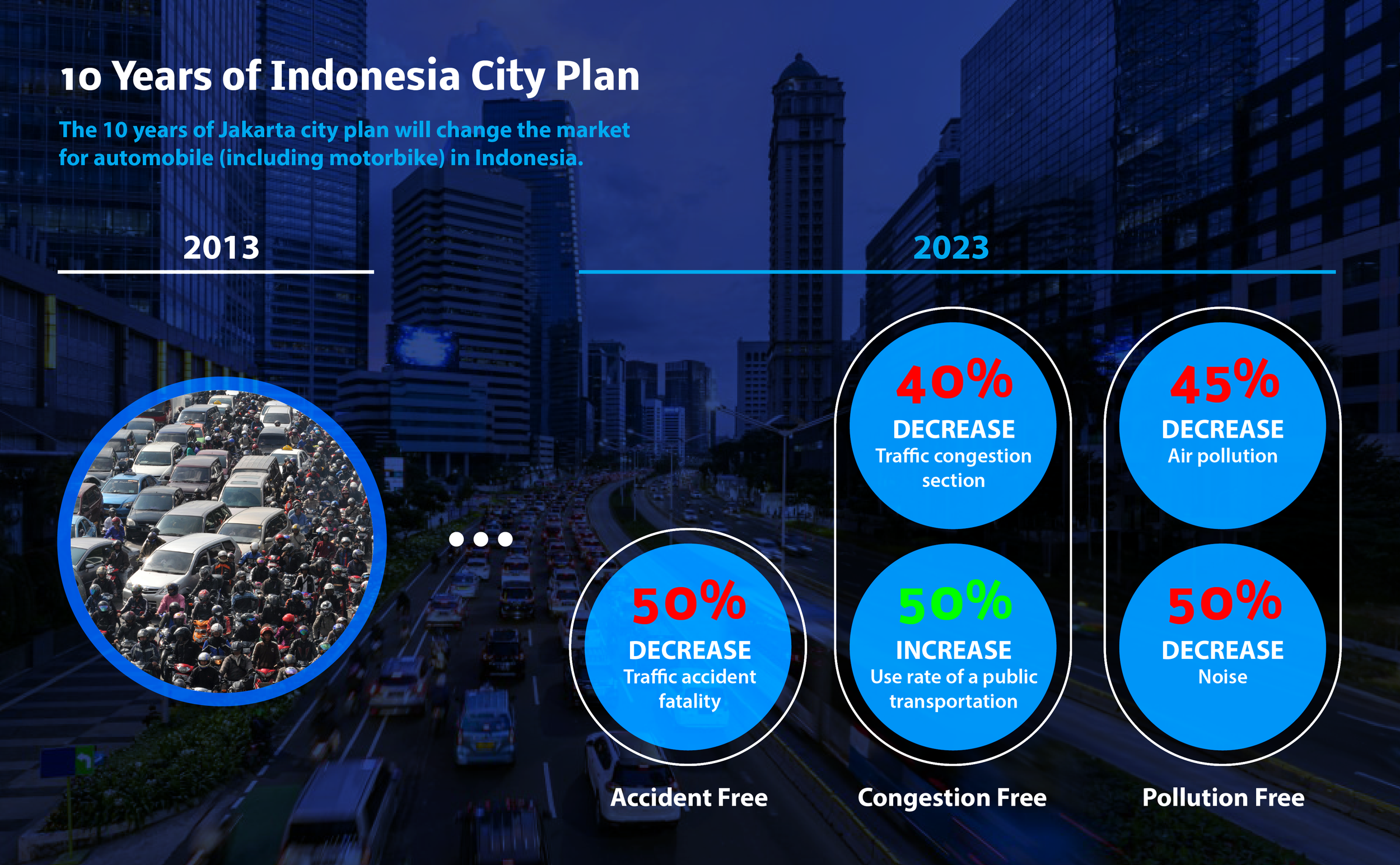
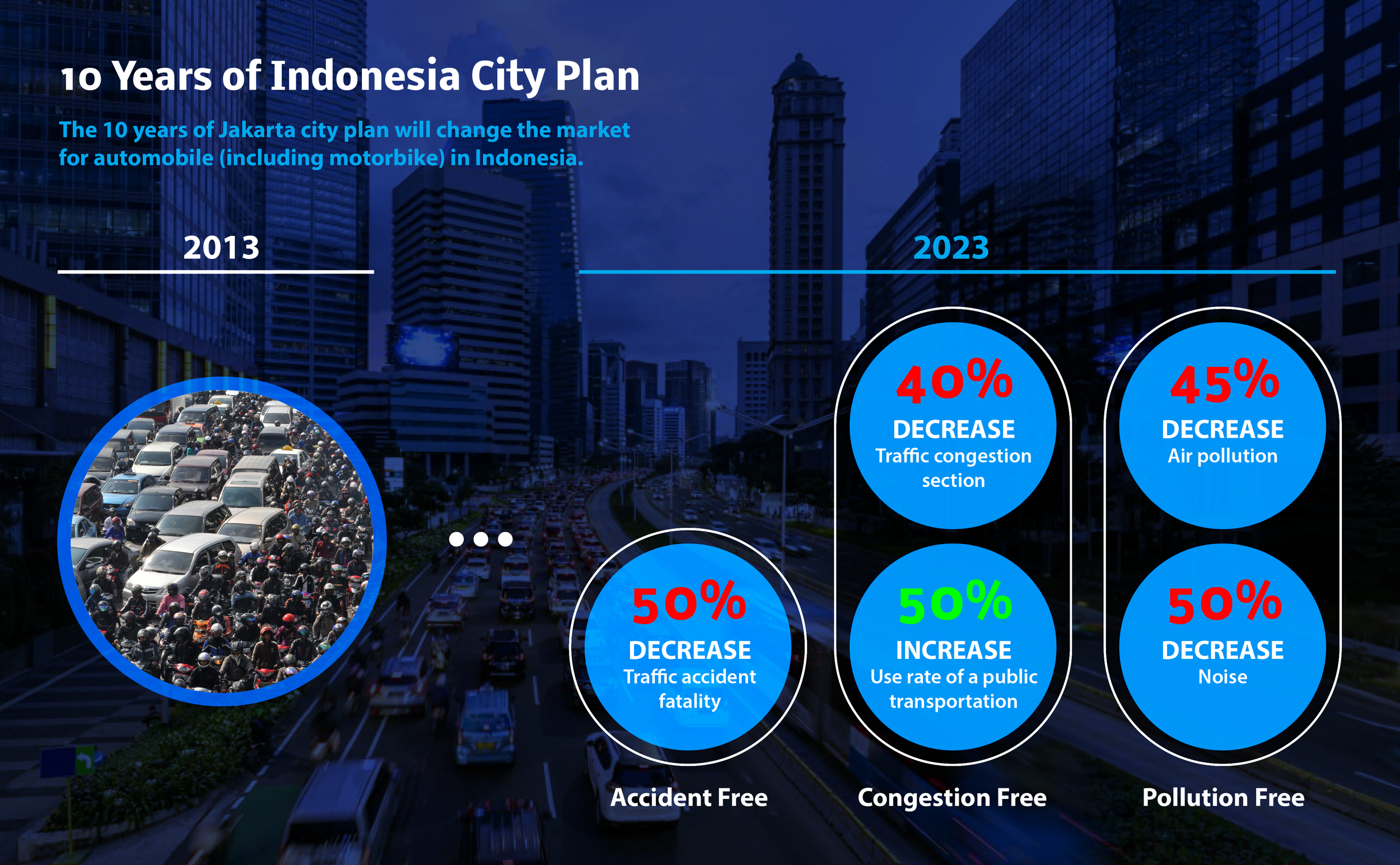
City context: Jakarta, where congestion, pollution, and stricter enforcement were expected to intensify
User segment: 18–30 suburban commuters whose mobility is constrained by limited public transportation schedules
03. How to Win
Freedom beyond transit schedules: Provide on-demand station access so young commuters can travel when they need to, not when public transportation allows.
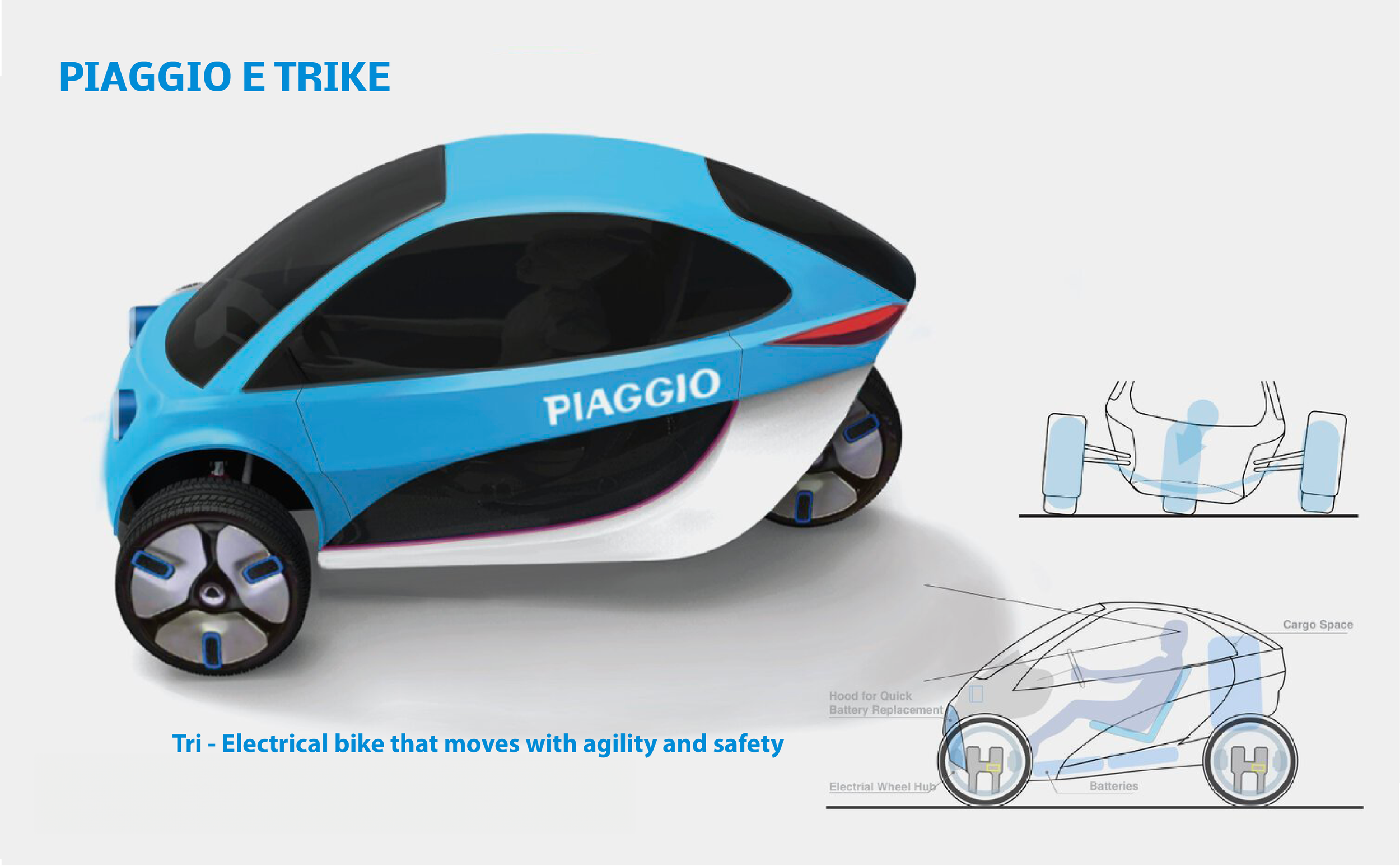
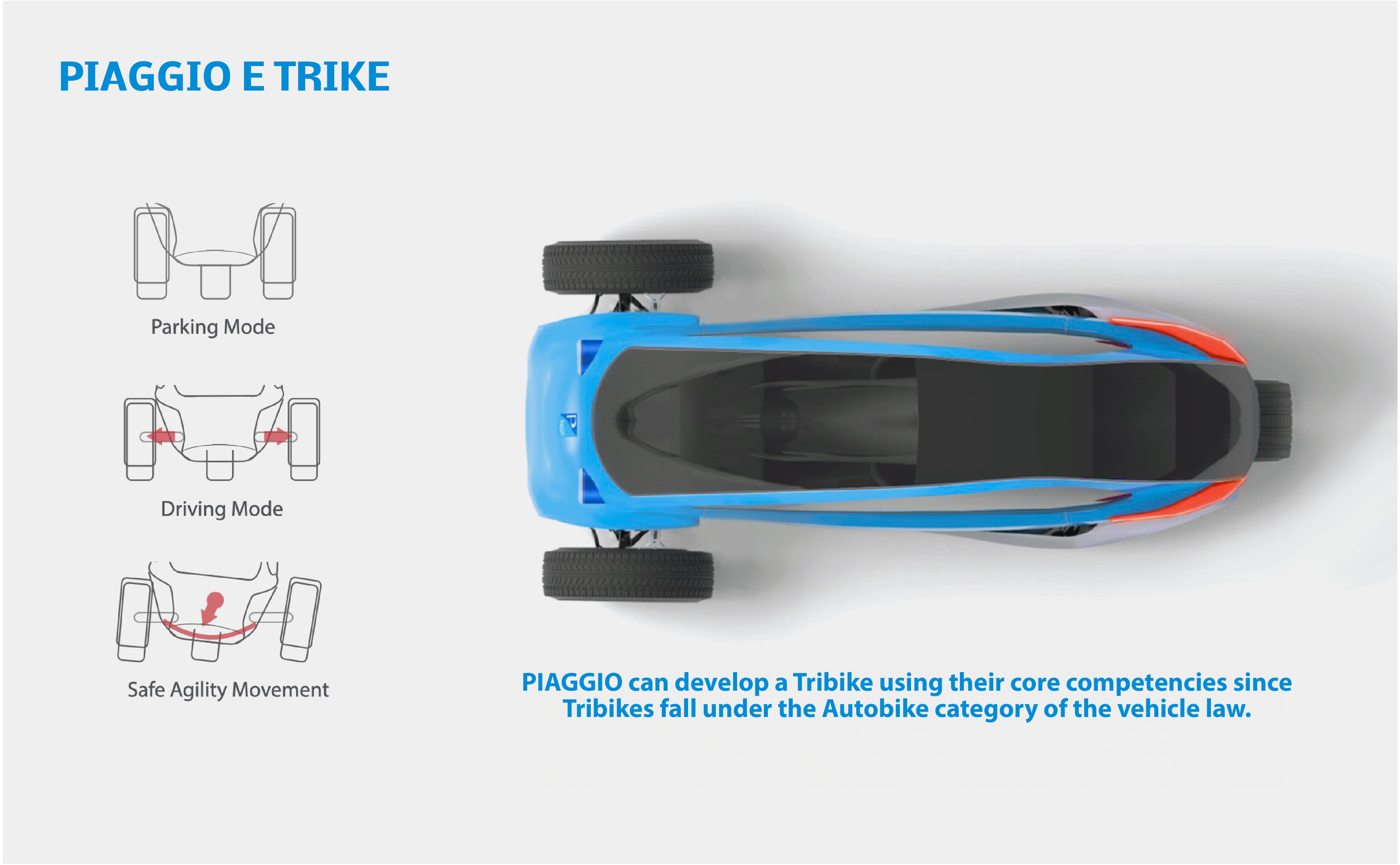
Safer personal mobility: Offer an E-Trike concept that preserves agile movement while adding protection to reduce safety anxiety for everyday commuting.
A commute experience that feels enjoyable: Create a more comfortable “personal space” that fits Gen Z lifestyle expectations, not just transportation utility.
04. Capabilities to Implement
Develop an electric power system optimized for daily commuting and sustainability
Design a protective shell to improve rider safety and comfort
Build infotainment and data software for user experience and service optimization
Implement a rental management system for pricing, access, and fleet operations
Establish PIAGGIO Stations to enable rentals and suburban coverage
05. Management System to Grow
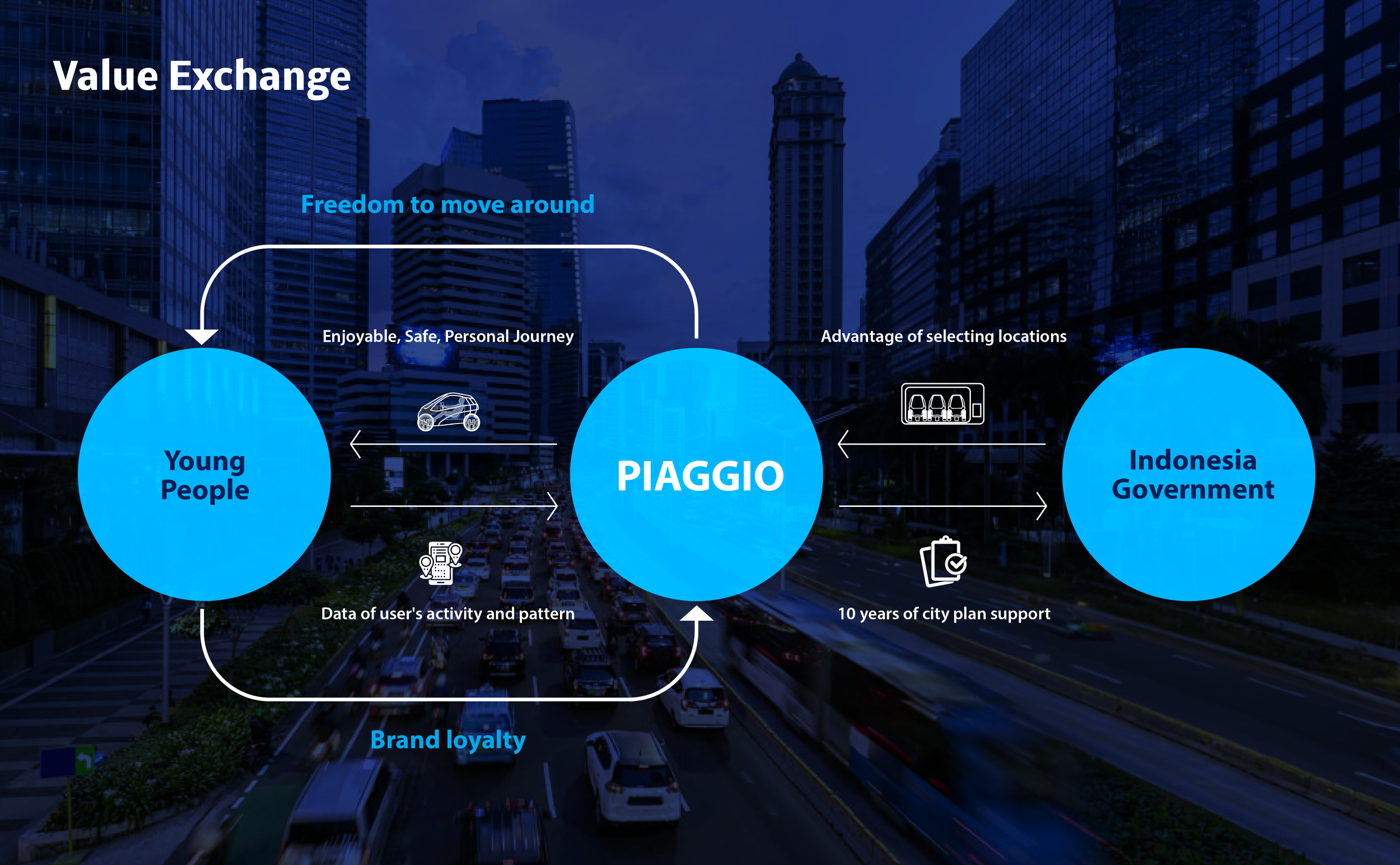
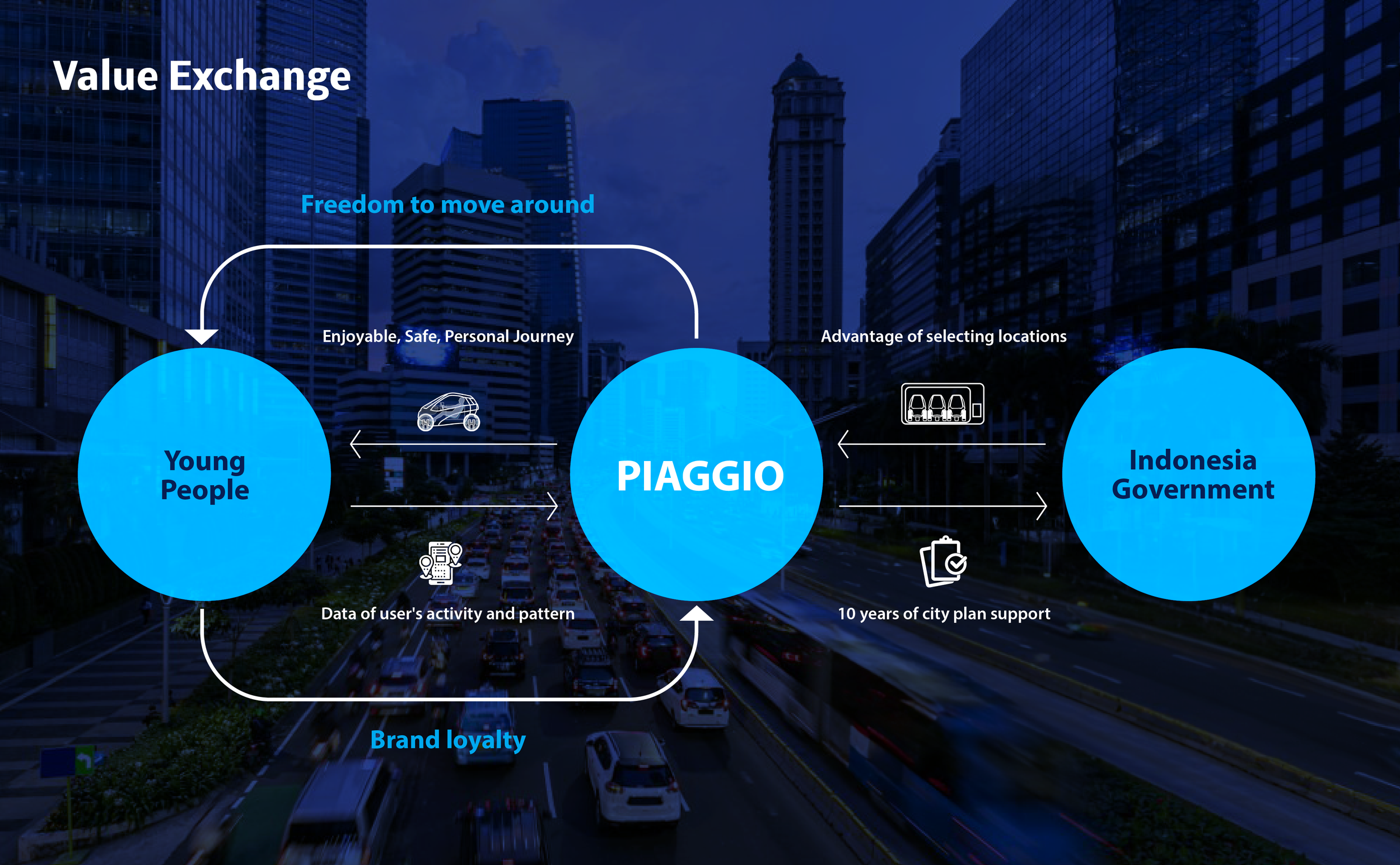
Use a value exchange map to track outcomes across riders, PIAGGIO, government, station operators, and partners
Measure rider value (safe, enjoyable commuting), business value (rental + maintenance revenue), and public value (reduced congestion/pollution)
Improve station placement, product features, and operations using usage data and partner feedback loops
06. Next Step / Future Foresight
Partner with the Indonesian government to scale PIAGGIO Station over a 10-year horizon
Expand station coverage to support suburban growth and reduce dependence on limited parking
Position the service as a solution for congestion, pollution, and noise as enforcement tightens
Build long-term capabilities in rentals, software, and fleet operations to sustain the model