FRAMING QUESTIONS
If you can’t find the right answer,
your question might be wrong.
Solutions start with defining right questions. That’s why my problem-solving process begins with framing questions. Framing questions helps me redefine the real problem, set clear research boundaries, uncover deeper insights, and align the team around what we’re truly trying to solve.
Just as importantly, questions create a shared language for collaboration—so we can reconcile different opinions, clarify trade-offs, and move forward with everyone aligned toward the same goal.
1) Scope of Activities
Setting Research Boundaries
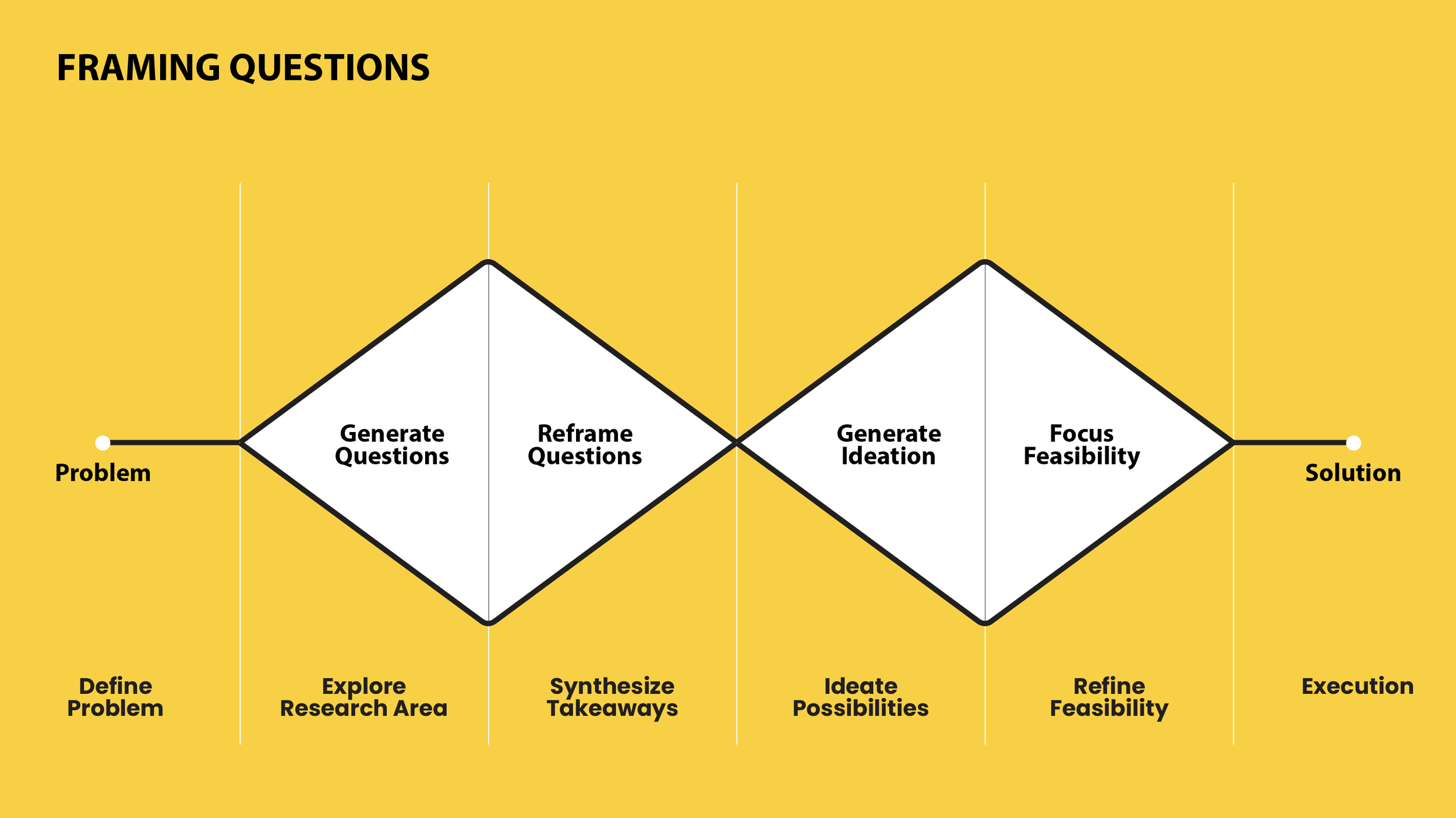
Framing questions starts in the ideation stage. Generating questions is only the first step—the real value comes from prioritizing them. Because product and service development is inherently iterative, teams explore broadly and then narrow down as they learn. Strong framing questions clarify what needs to be researched first, so the team can focus on what matters most within limited time and resources.
2) Value-Driven Approaches
Digging into the “Why”
Framing questions also prevents teams from relying on assumptions or outdated knowledge. Many problems stall because we believe we already know the answer. I use open-ended questions to dig into the “why” behind the problem—why it exists, why it matters, and what it means for users and the business. Since framing questions are open-ended, each answer often leads to articulate ‘why’ and the next question. This expands the research space when needed, then gradually narrows it as clarity grows, guiding the team toward a well-grounded solution.
3) Learning Structure
Aligning the Team Around Shared Understanding
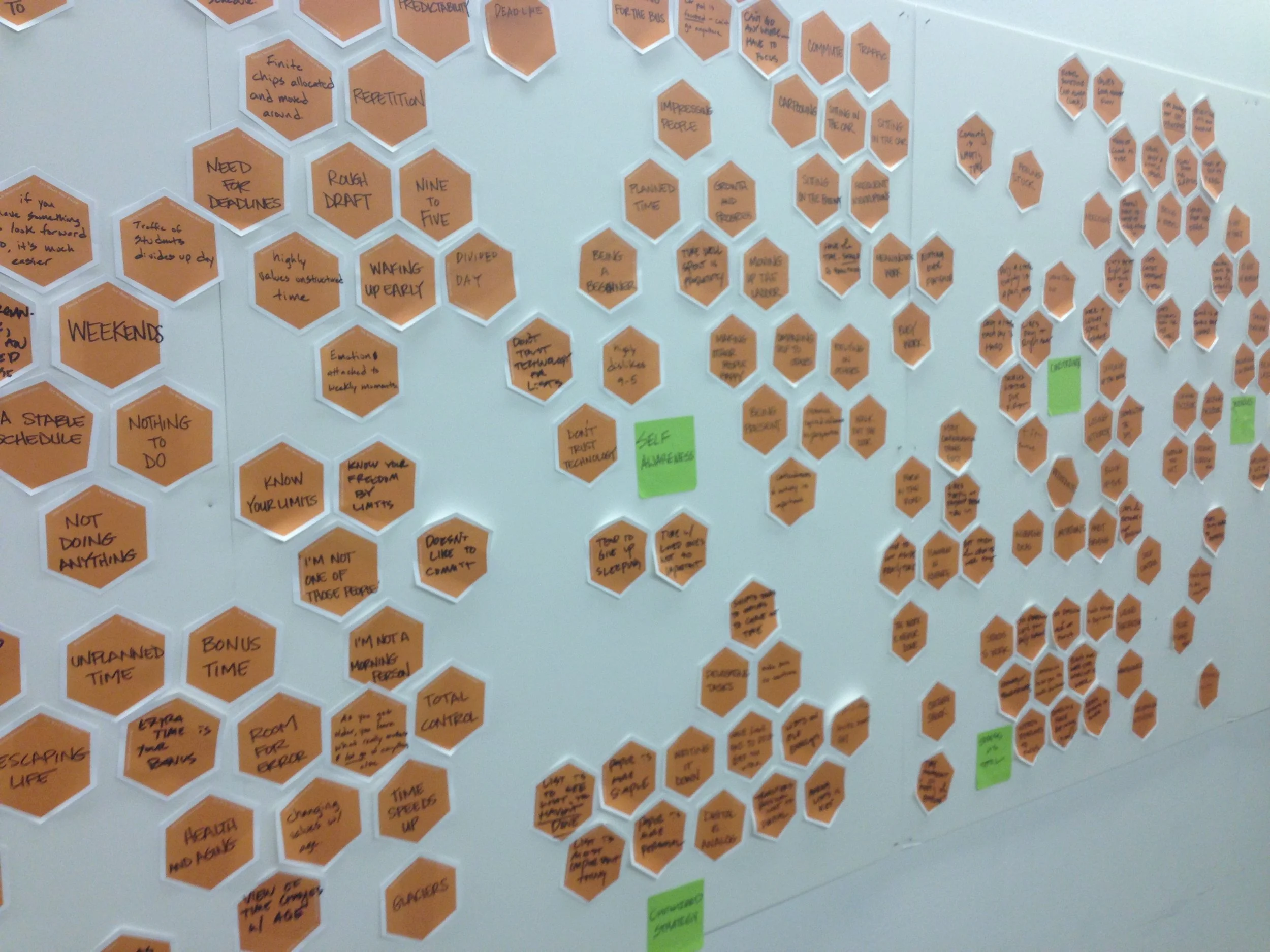
Framing questions creates a shared learning structure for collaboration. When the team generates and prioritizes questions together, we build a roadmap for exploration. Each person contributes findings, and we refine the questions as we learn more. This doesn’t just make collaboration smoother—it strengthens decision-making. The team brings more relevant information into the work, aligns around a shared goal, and moves forward with clearer reasoning. In that sense, framing questions isn’t just a thinking tool—it’s a structure that keeps the team aligned and moving in the same direction.