TESLA INFOTAINMENT STUDY
Exploring Tesla Infotainment Unit as a Family Entertainment Console
In 2012, as part of a research class, I designed a prototype for a future Tesla screen concept envisioned as an entertainment console. The goal was to enhance family interactions during car journeys by transforming travel time into a shared, engaging experience. I focused on bringing adults and children together through entertainment features that could serve diverse needs across the family.
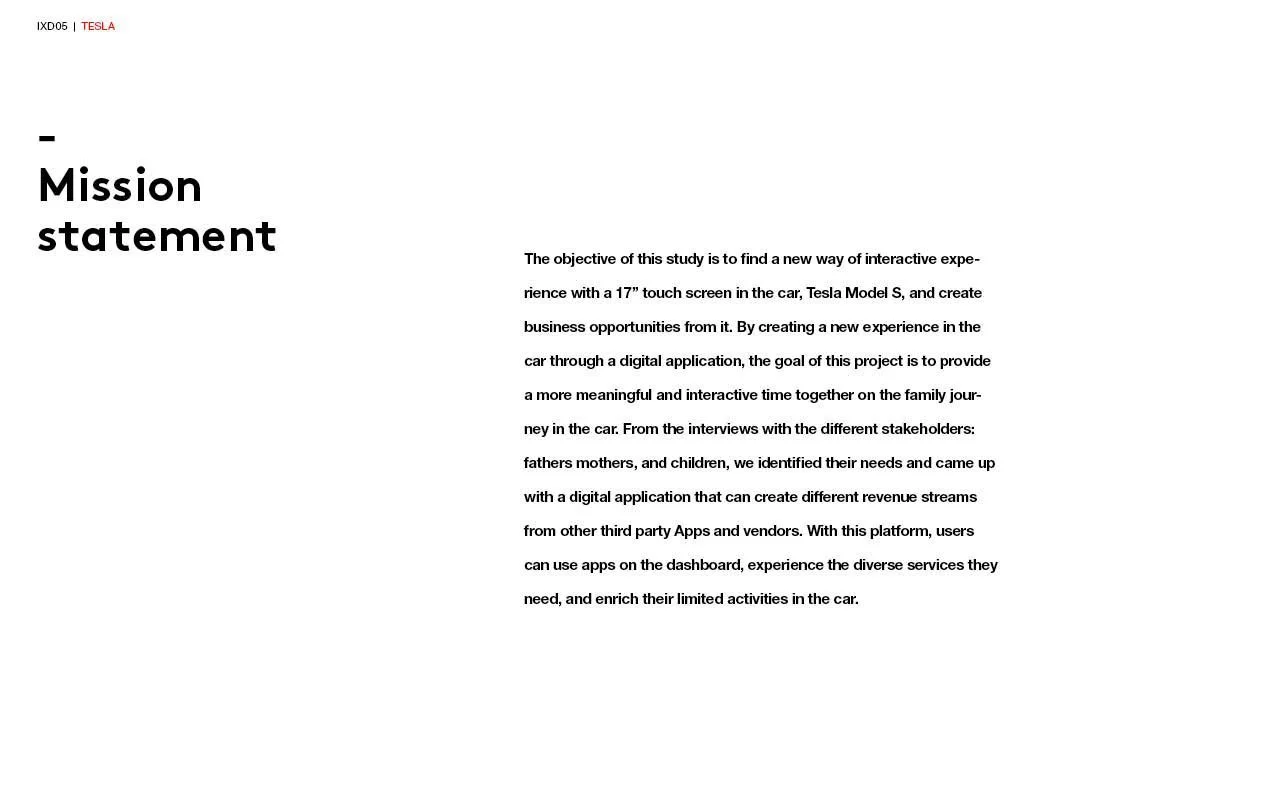
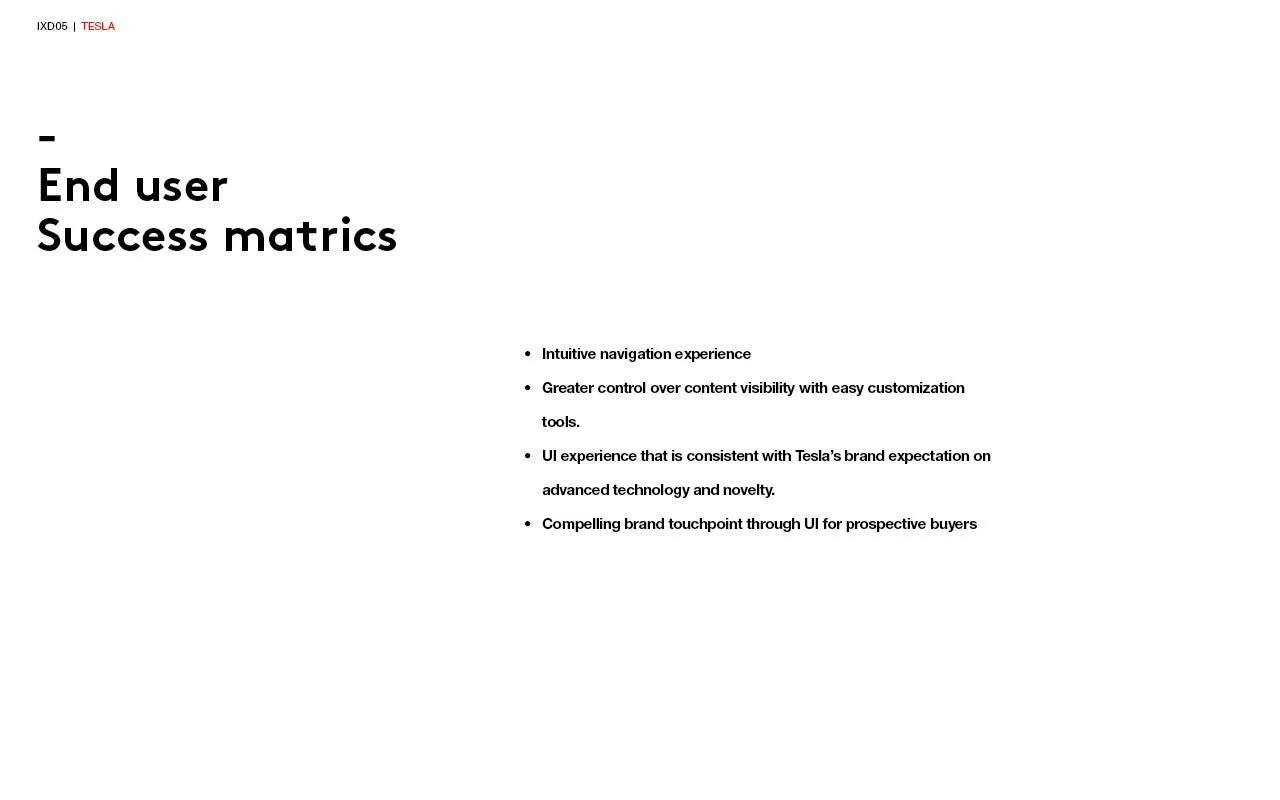
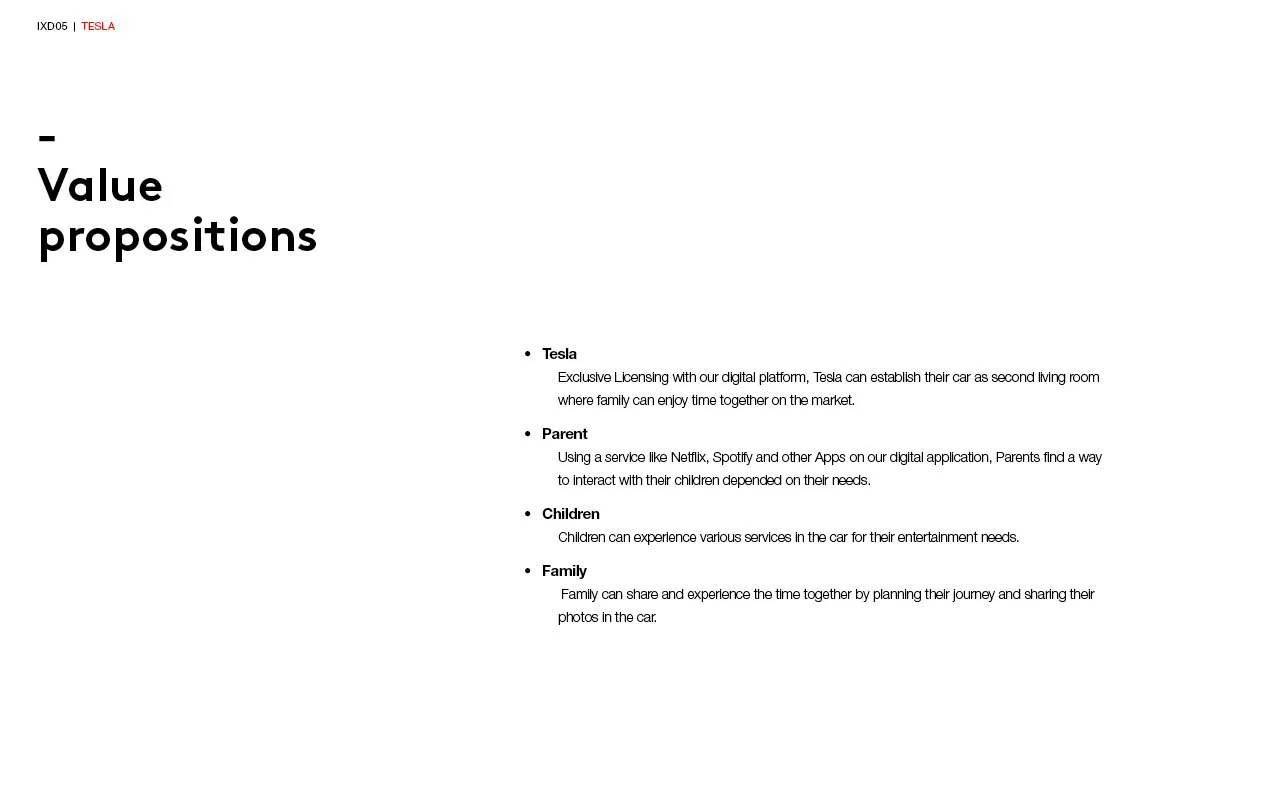
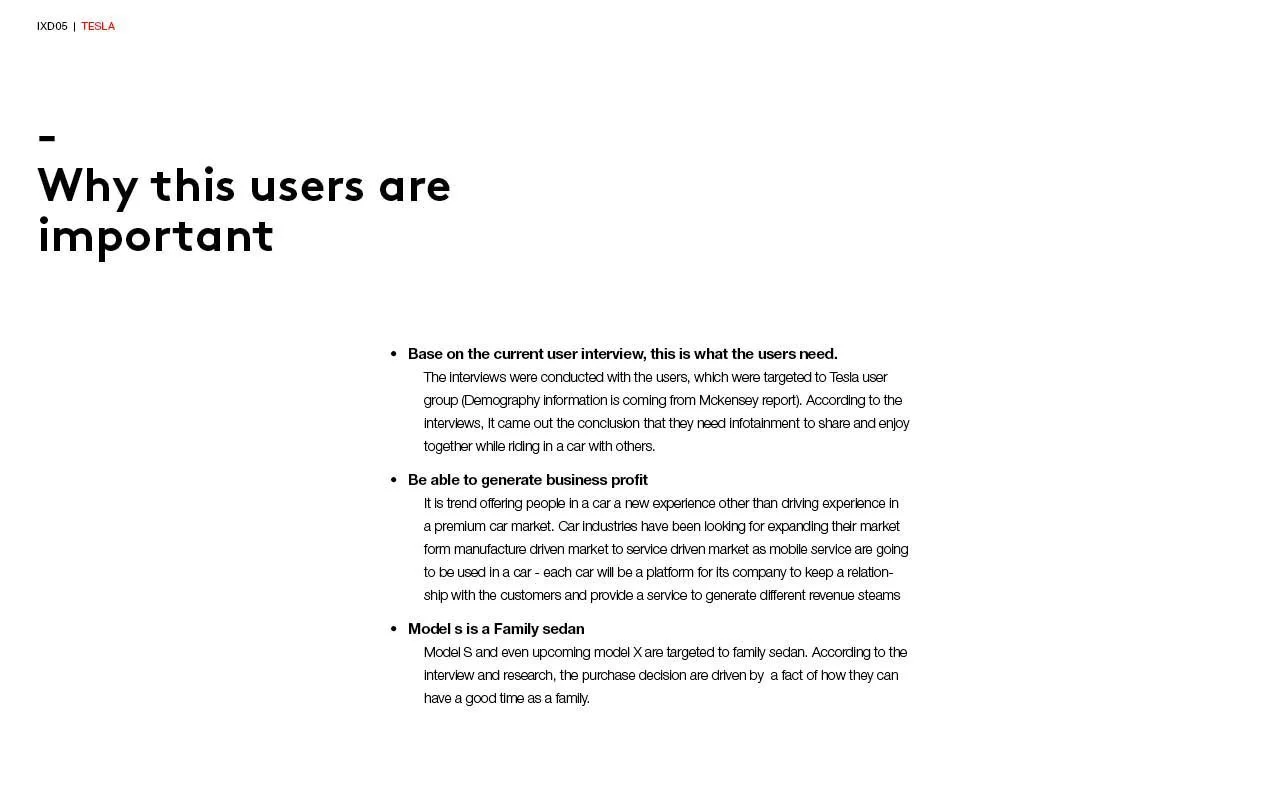
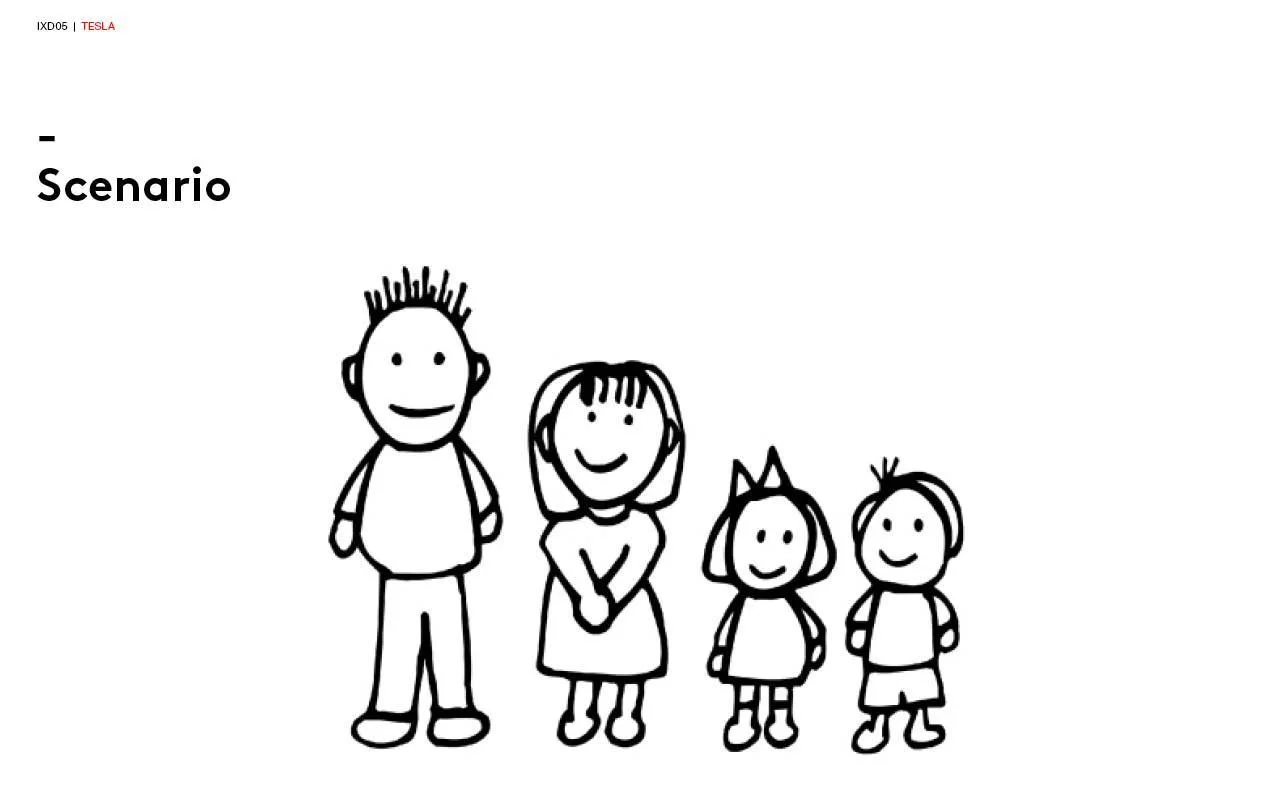
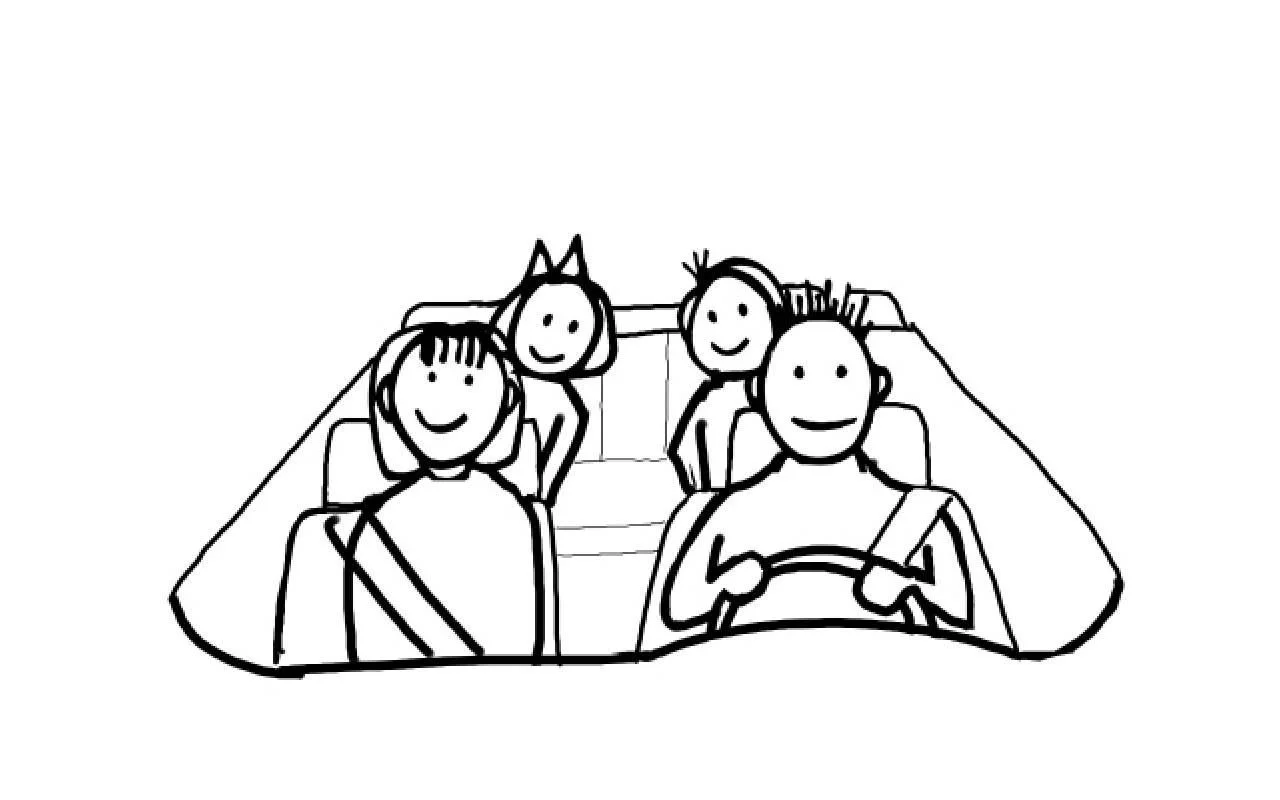
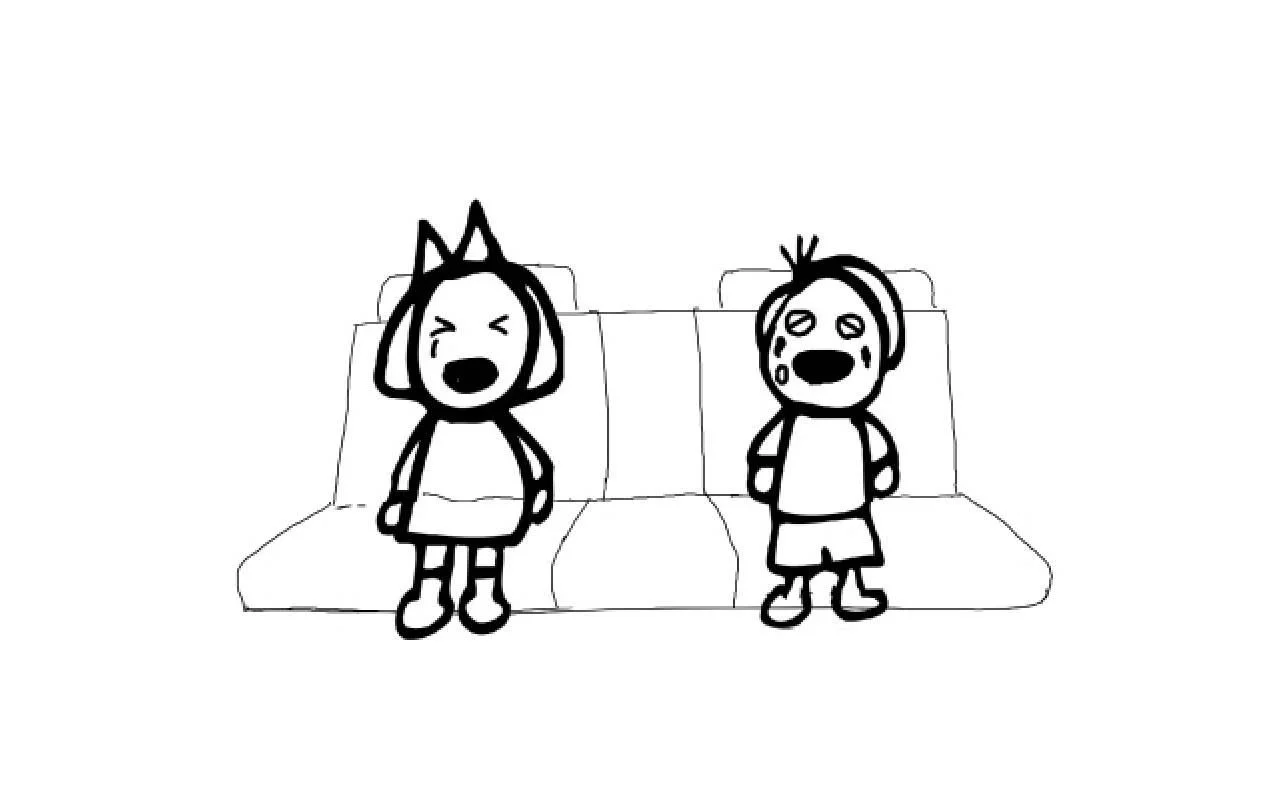
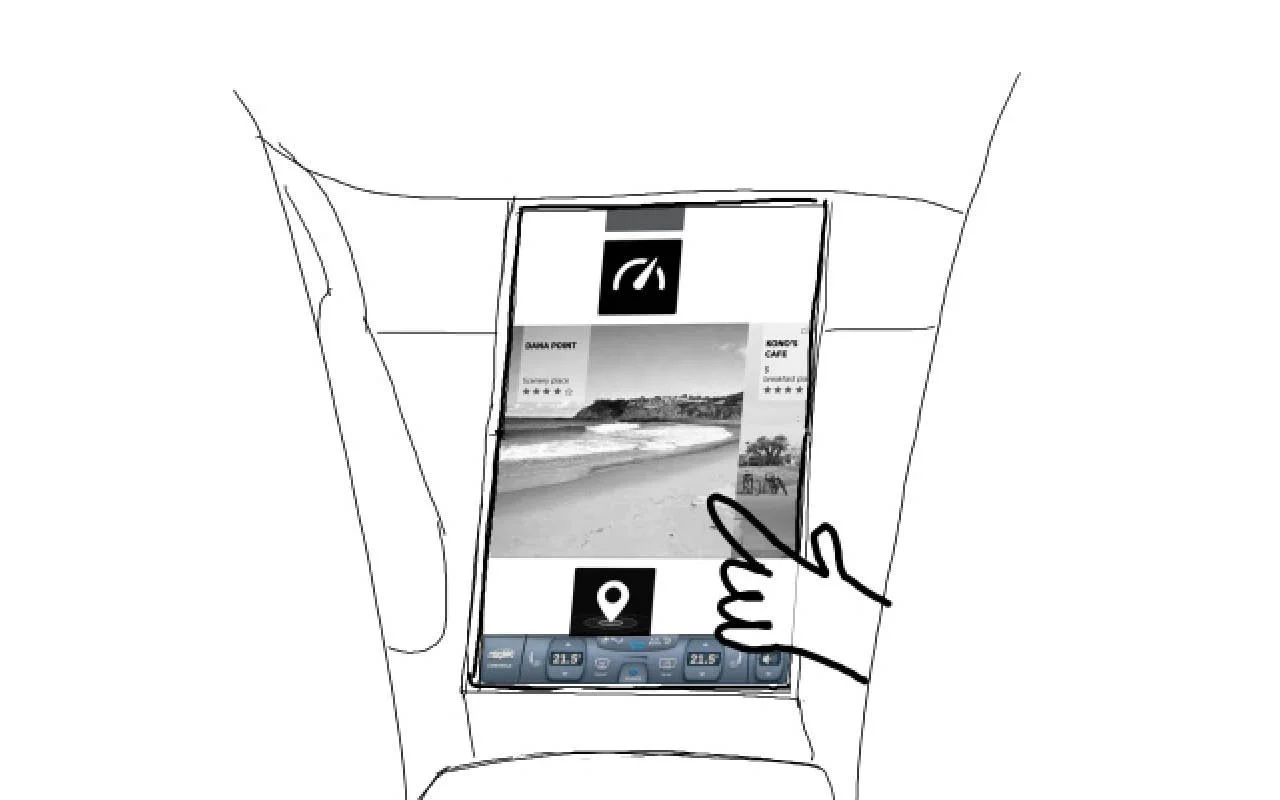
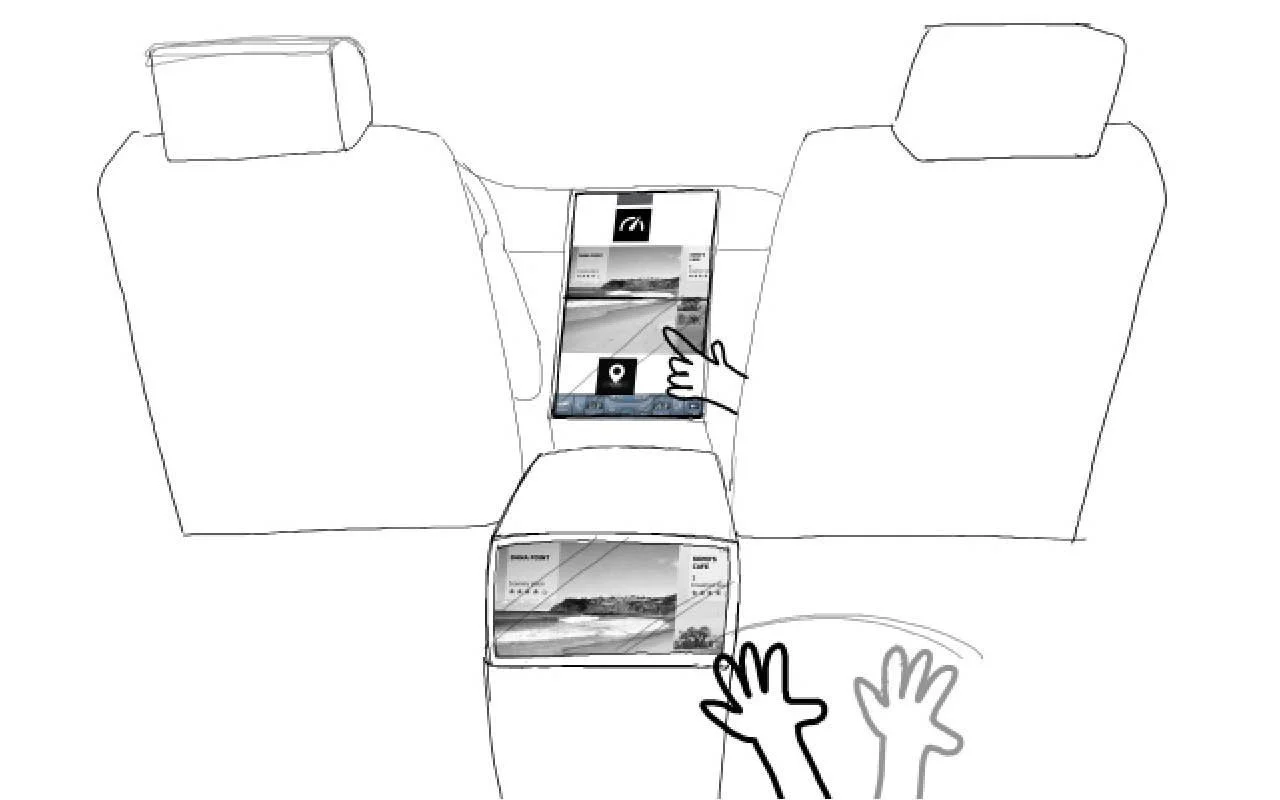
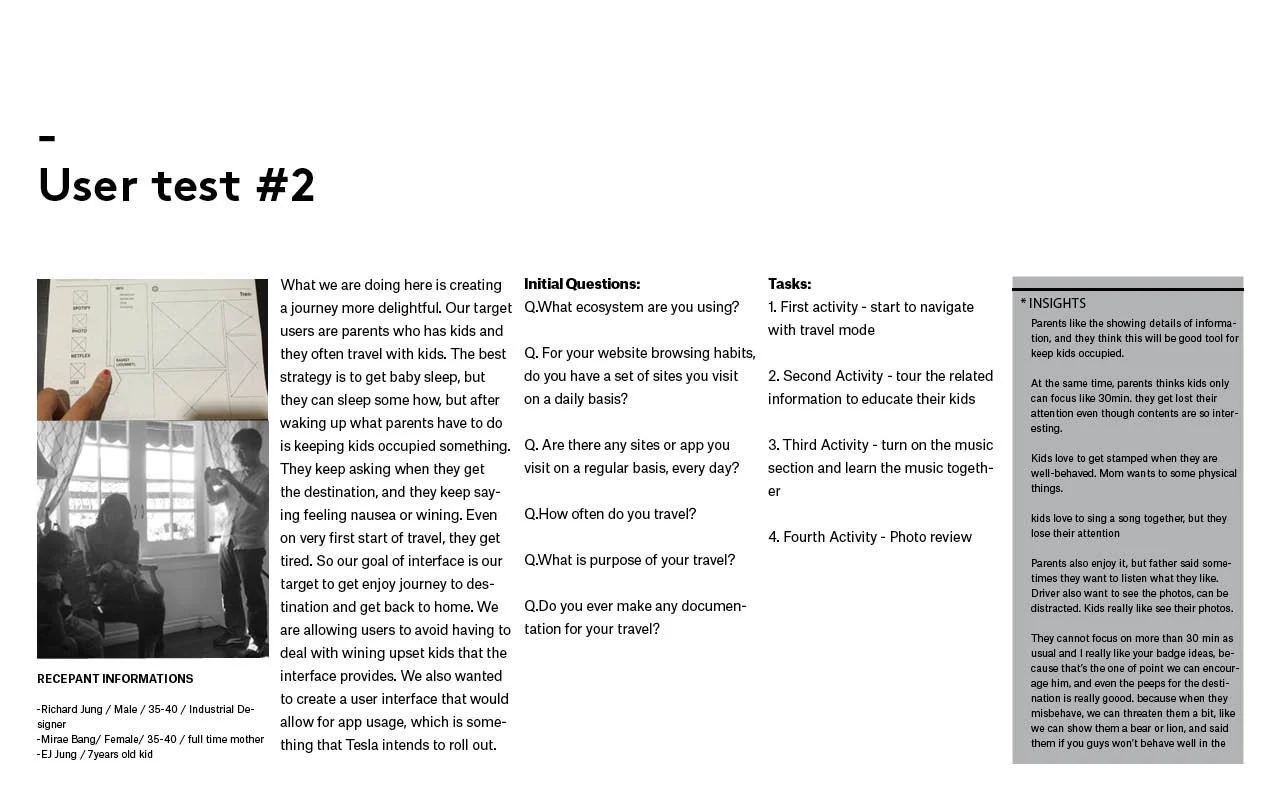
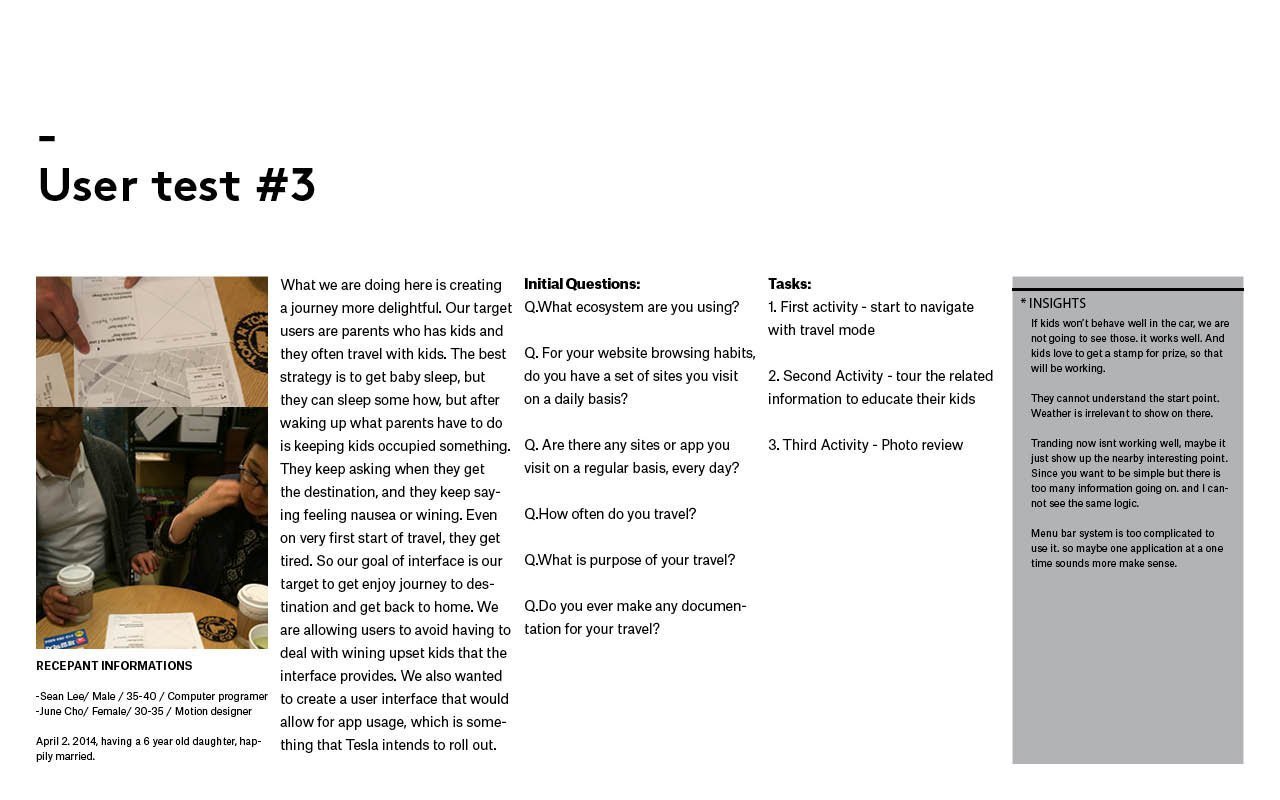
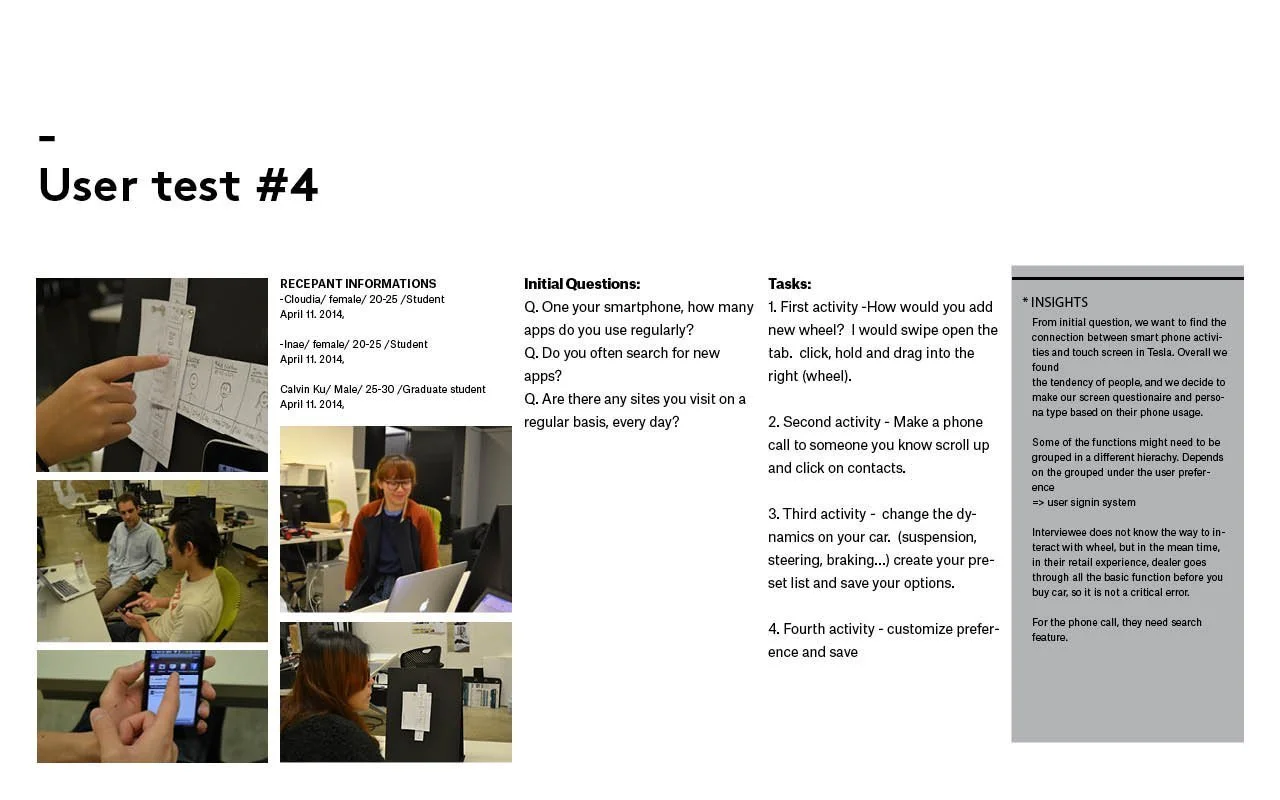
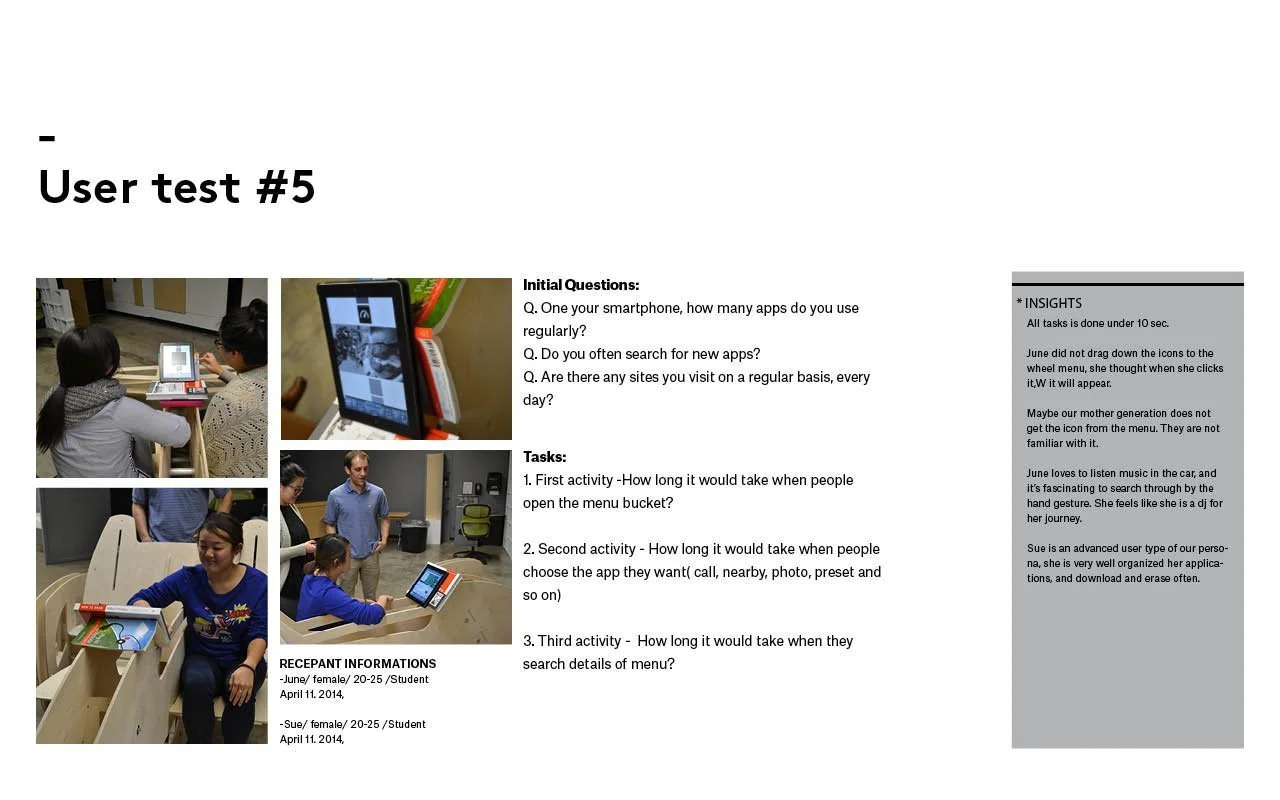
In this study, I approached the Tesla screen concept through a value-first lens by focusing on the outcome families actually want during long rides: turning idle travel time into a shared, enjoyable experience without increasing driver distraction. That framing guided every decision toward designing for different ages, creating intuitive interactions for passengers, and protecting safety constraints for the driver.
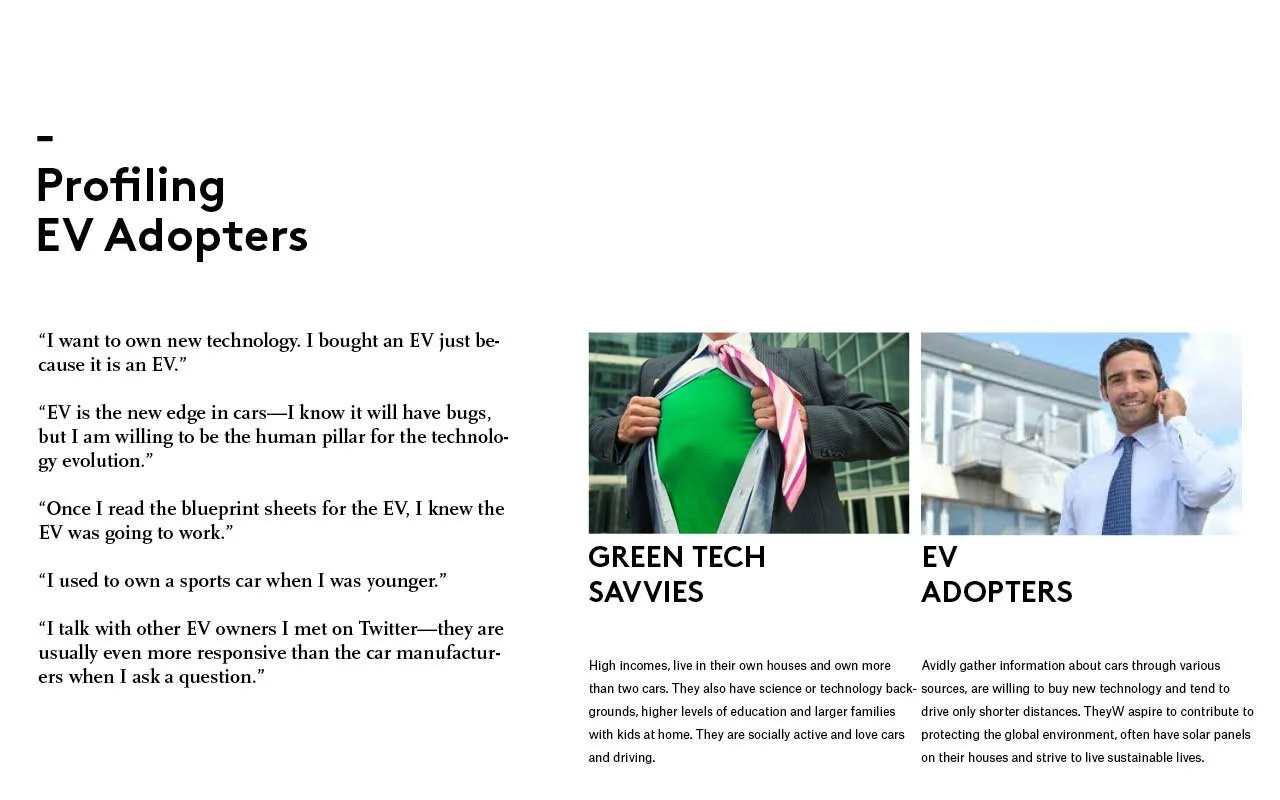
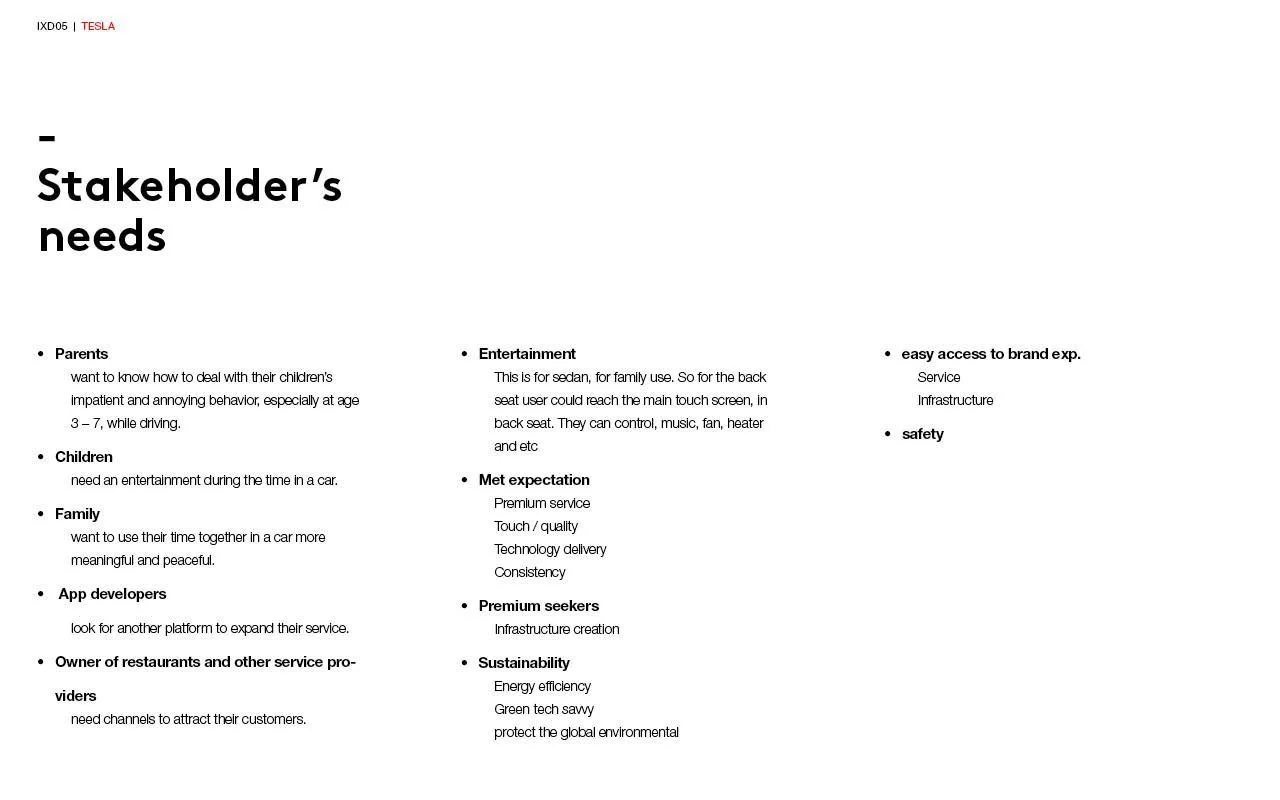
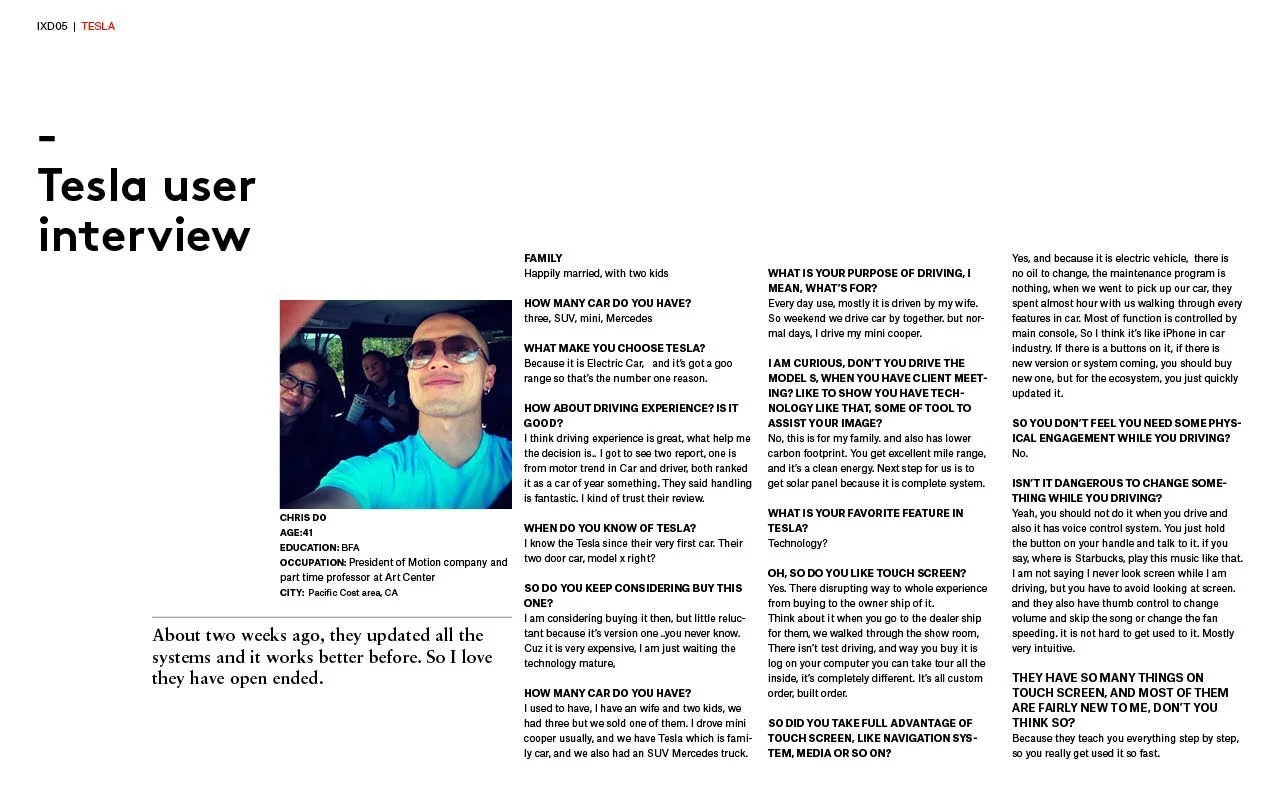
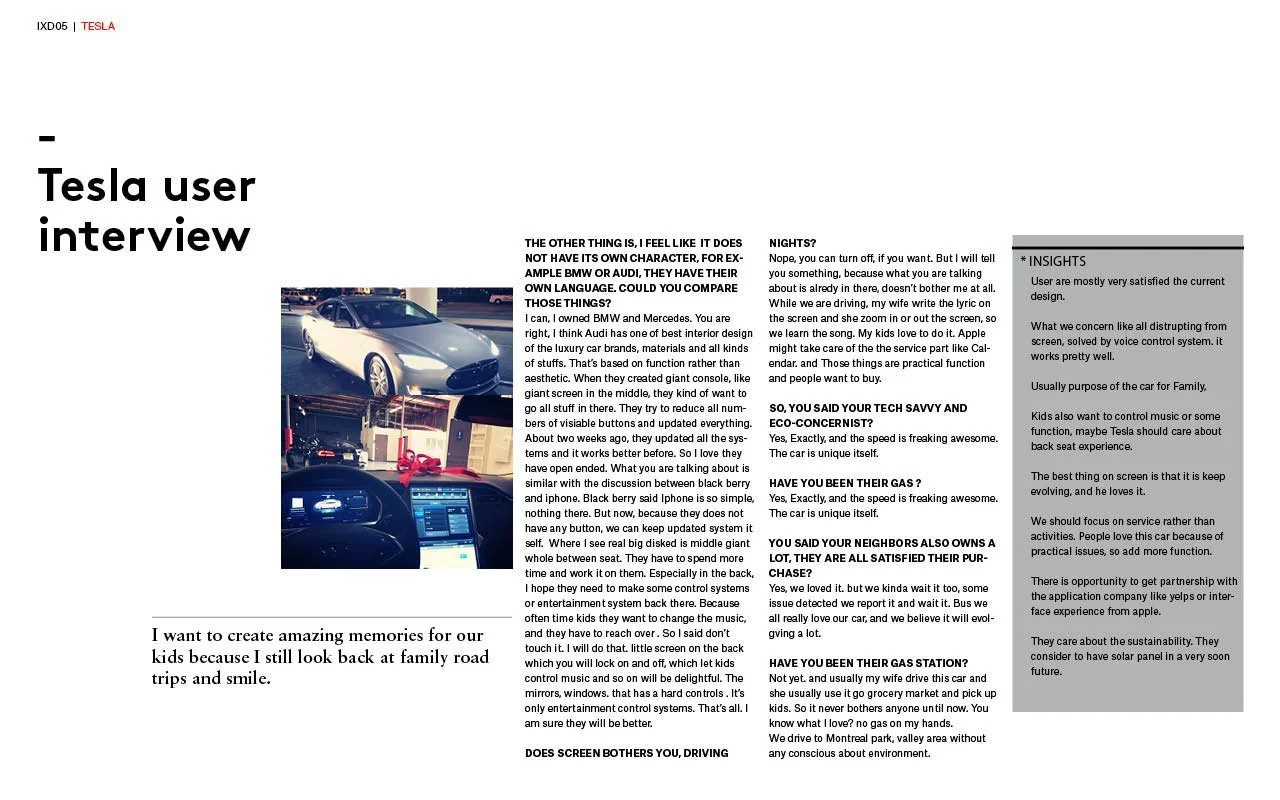
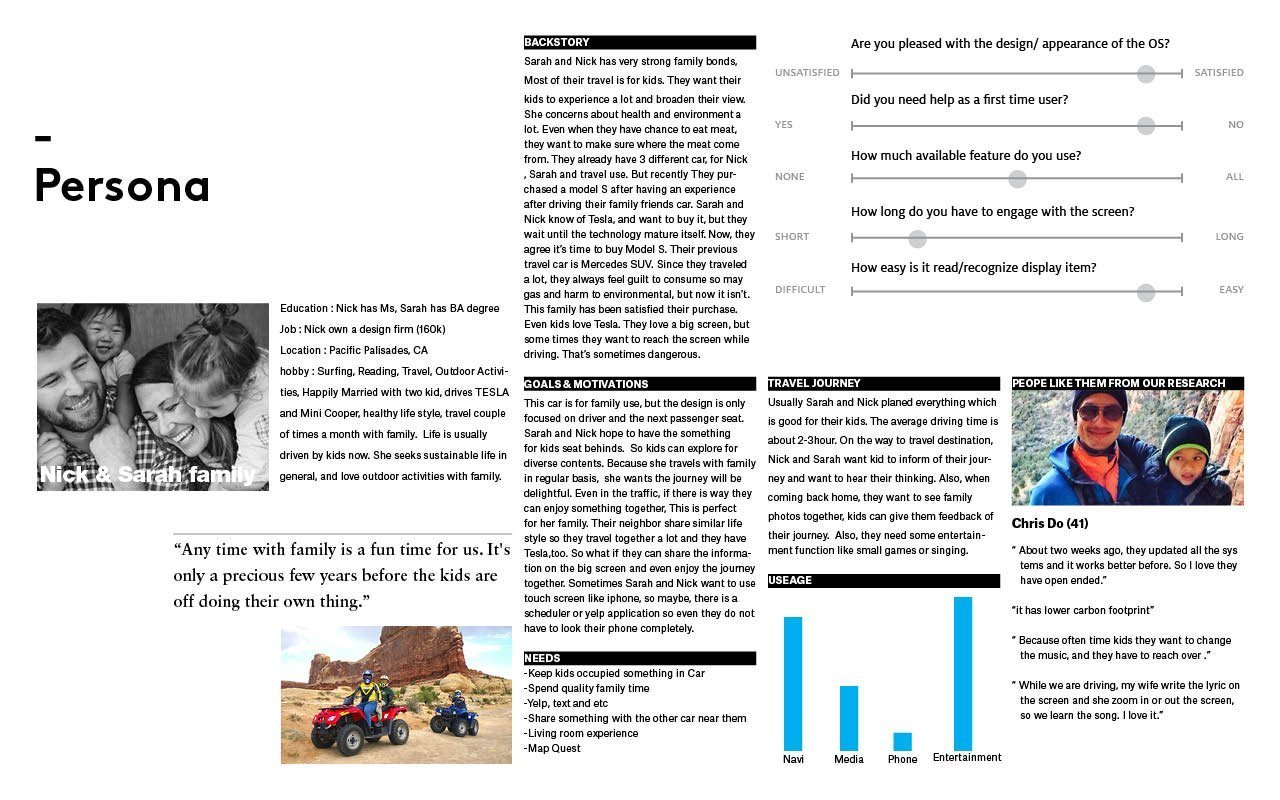
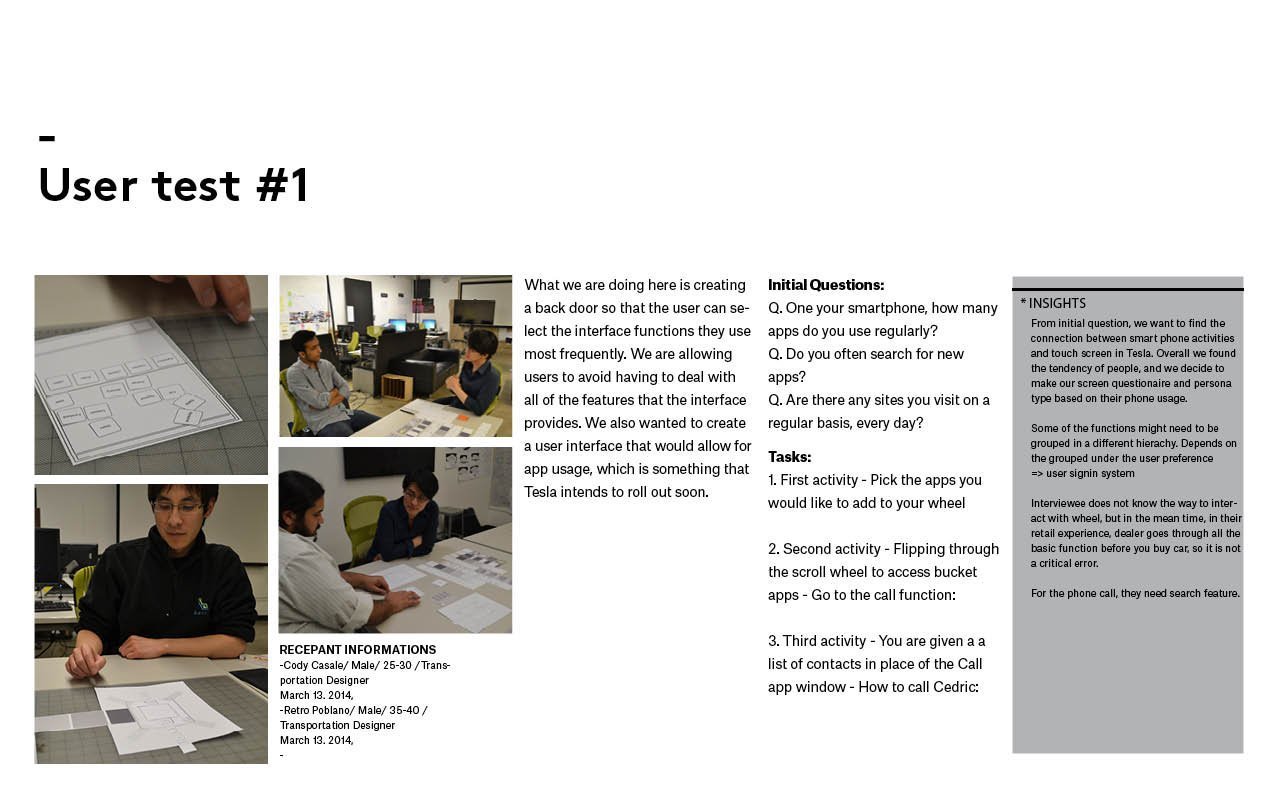
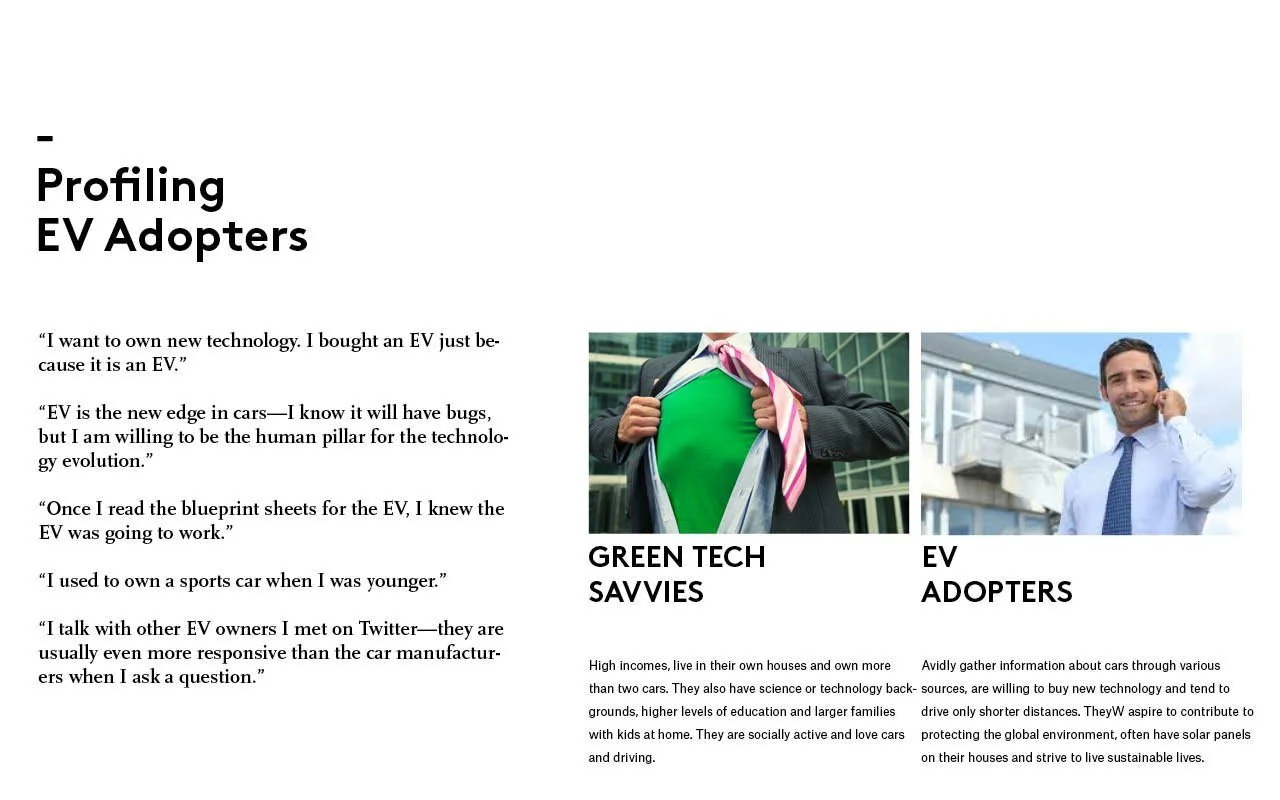
The process began with research into how families interact during car rides and how technology could support those interactions. Through user interviews and persona work, I identified the need for an intuitive, family-friendly interface. I then created storyboards and scenarios to show how different age groups might use the system—watching movies, playing games, or engaging with educational content—so the concept could be evaluated in realistic situations.
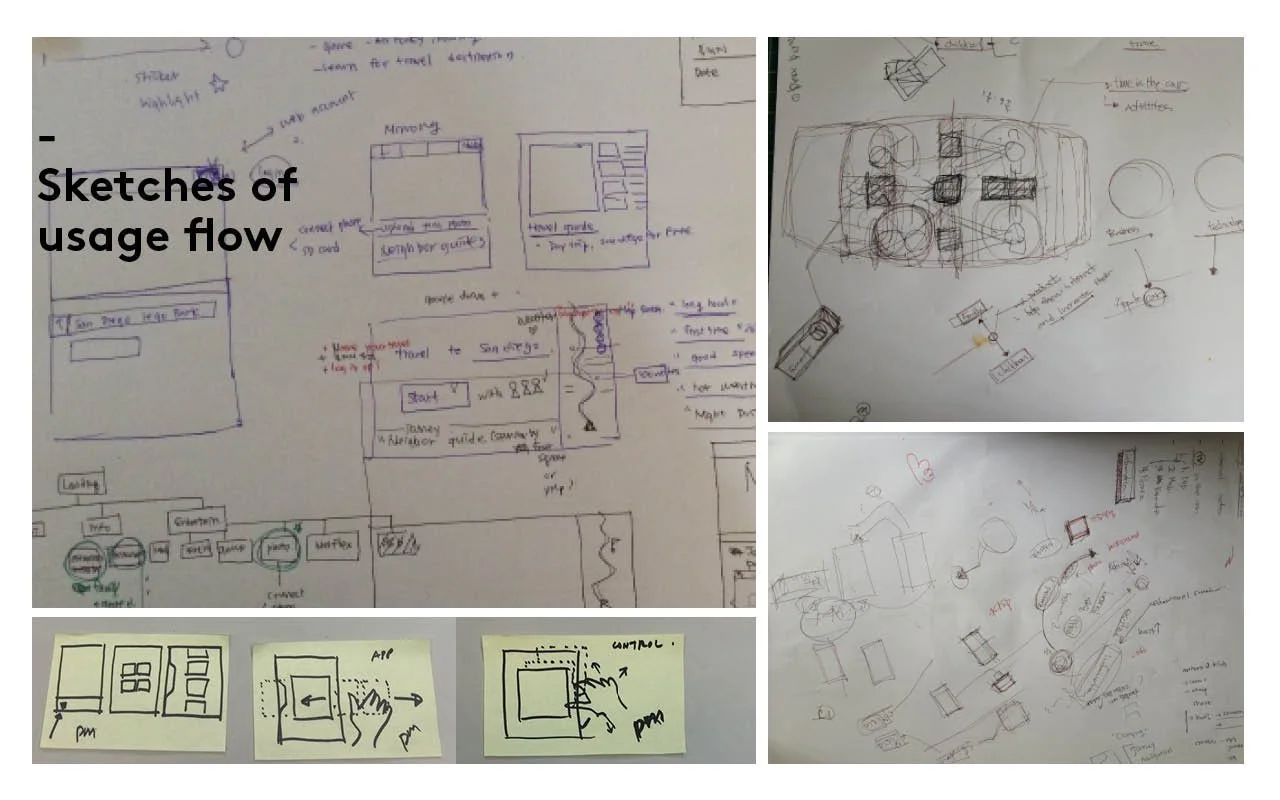
From there, I developed sketches and user flows and refined them through multiple rounds of iteration and user testing. Feedback helped shape an interface that felt engaging while remaining easy for all ages to operate. Across each iteration, I prioritized minimizing driver distraction while maximizing interactive potential for passengers, resulting in a concept that fostered shared experiences and made car journeys more interactive and enjoyable.